
Houseplants in summer: heat, holidays and watering
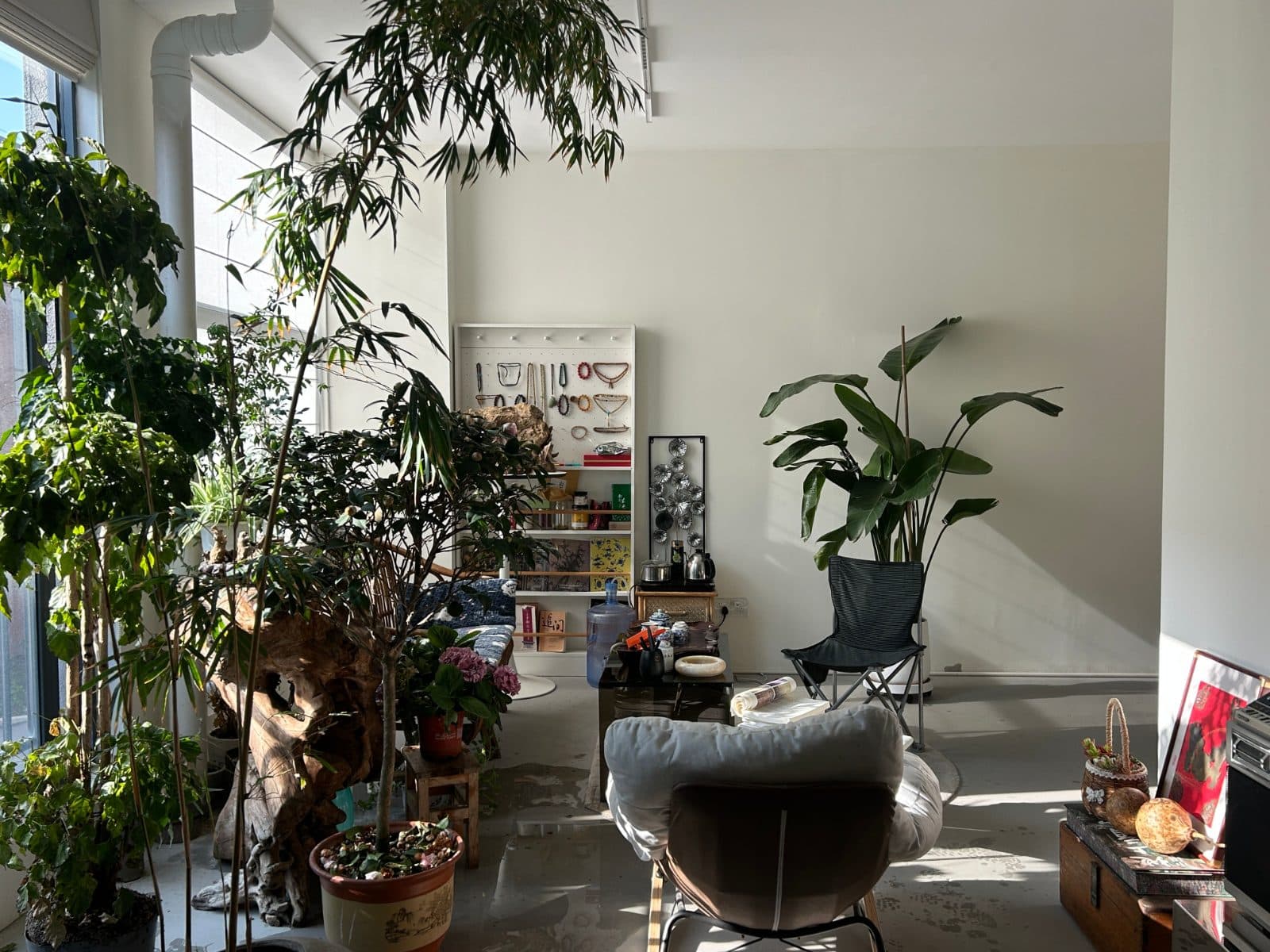
Photo by PARTY MALL
Summer puts even the most attentive plant carers to the test. High temperatures speed up the evaporation of water from the soil and the transpiration of the leaves, so water needs change from week to week. To make things trickier, along come the holidays: just when plants would need more consistency, we head off for days on end. With a few precautions, though, you can reduce summer stress and organise your absence without coming home to pots full of dried-up leaves.
Why the heat changes everything
As temperature and light increase, many houseplants enter their most active growth phase. The roots take up more water, the leaves lose more of it through their stomata, and the soil dries out quickly, especially in small pots or terracotta ones, which let moisture evaporate through their walls too.
This means the winter watering rhythm is no longer suitable. A plant you watered every ten days in winter might need watering every three or four days in the height of summer. The most reliable way to tell is still the finger test: push a finger into the soil up to the second knuckle. If it's dry deep down, it's time to water; if it's still moist, wait.
Watch out for a common misconception: heat doesn't mean watering blindly every day. Constantly soggy soil in a pot, perhaps with a saucer full of water, encourages root rot in summer too. The goal is to follow the actual drying of the substrate, not a fixed schedule.
Protecting plants from the heat
Direct light and scorching
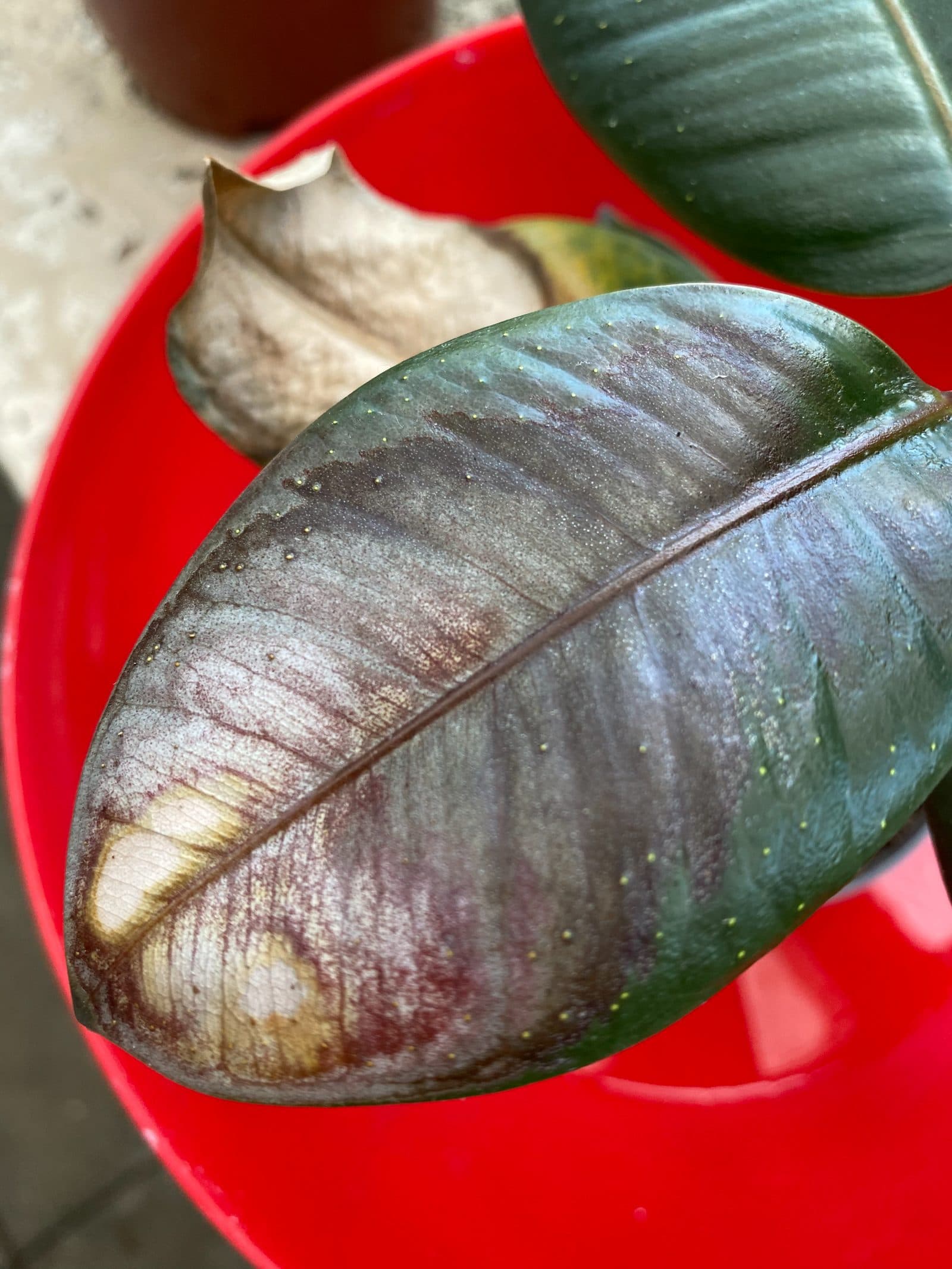
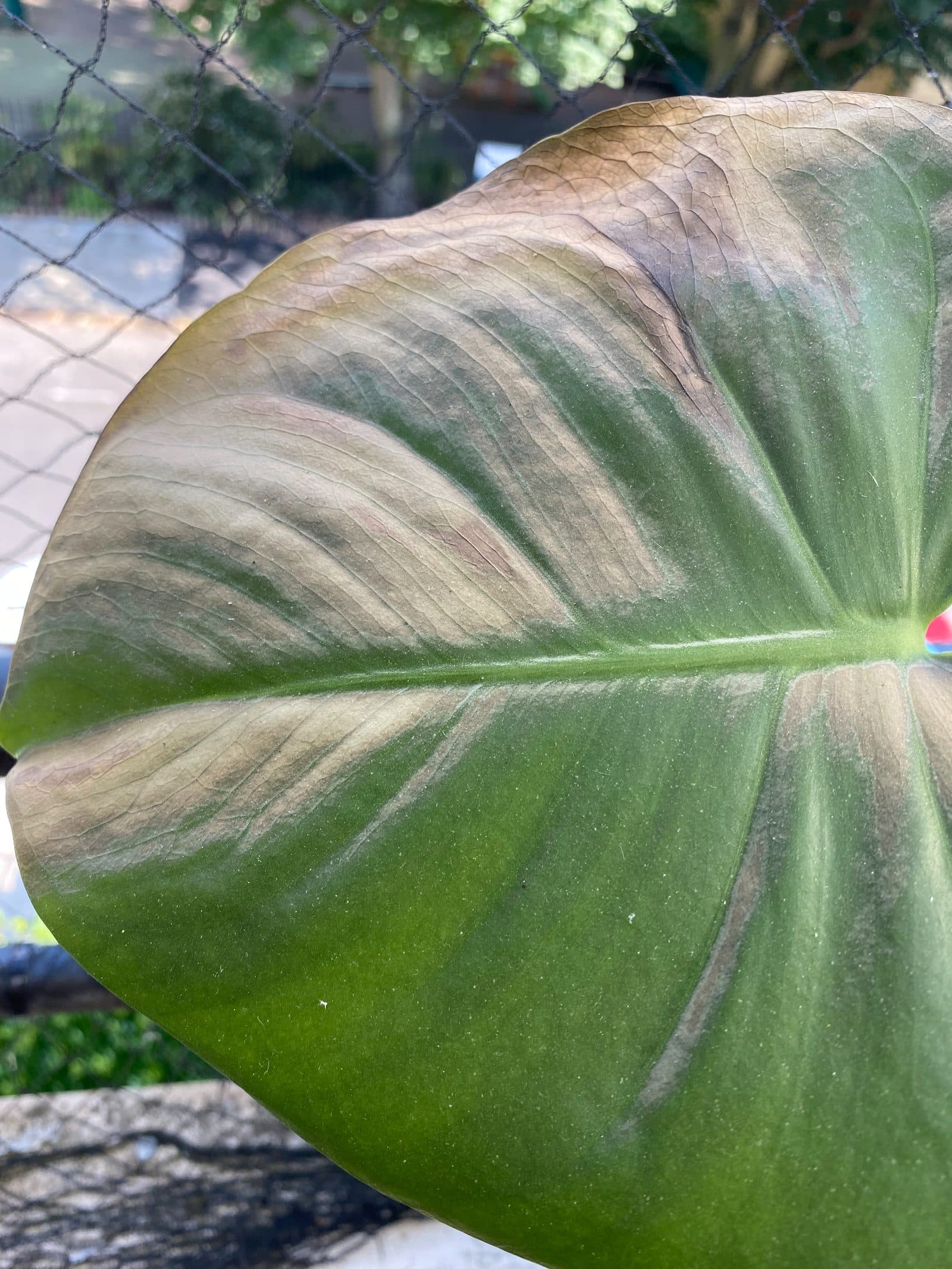
Many houseplants prefer bright but filtered light. Direct midday sun in summer, especially through a pane of glass that amplifies the heat, can scorch the leaves, leaving pale or brown, dry patches. Move the pots a few steps back from a south-facing window, or screen it with a light curtain during the middle of the day.
Plants on the balcony
Taking plants outdoors in summer does them good, but the move should be gradual to avoid sun shock. For the first few days keep them in partial shade, then increase their exposure little by little. On a full south-facing balcony the substrate can overheat: choose lighter-coloured pots, group the containers so they shade one another, and on the hottest days water early in the morning or in the evening, never on the leaves in full sun.
Dry heat and ventilation
Air conditioners and fans pointed directly at plants dry out the leaves and increase their transpiration. Keep them out of the air flow. For species that love humidity, grouping the pots creates a more favourable microclimate; a saucer with expanded clay and a film of water (without the base of the pot dipping into it) raises local humidity better than misting, whose effect is brief and modest.
Want a care plan tailored to your plants?
Join the waitlist: species ID, diagnosis and the Gemma assistant, with the lifetime founder discount.
How much to water at the height of summer (and in August)
There's no single figure that works for every plant: it depends on the species, pot size, type of soil, exposure and ventilation. In August, however, the water need is almost always at its peak. A few practical rules:
- Water deeply, not with a spray. Soak until water comes out of the drainage holes, then empty the saucer after a few minutes. That way the roots really hydrate instead of staying at the surface.
- Prefer early morning. The water is absorbed before the heat of the day makes it evaporate.
- Check more often, decide with your finger. Increase your checks, not automatically the amounts.
- Keep an eye on succulents. Cacti and succulents still want well-dried soil between waterings, even in summer.
It's worth remembering that very dry, hydrophobic soil sometimes repels water, which runs off down the sides without moistening the root ball. In that case, immerse the pot in a basin of water for ten to fifteen minutes, let it drain and go back to the normal rhythm. If you notice soft, drooping leaves, it can be a sign of either too much or too little water: it's worth reading the symptoms in context before reacting.
Planning your holidays: systems for your absence
For an absence of a few days most plants cope without any trouble: just water them well before you leave and move them away from the sunniest windows, to a cool, bright spot. For longer periods you'll need a few measures.
Moves and environment
Group the plants in a single cool room with indirect light. Close together they create a more humid microclimate and lose water more slowly. Keep the shutters ajar to reduce the heat without leaving the plants completely in the dark.
DIY self-watering systems
- Capillary cord (wick). A cotton or felt cord connects a raised water container to the pot's soil: the water rises by capillary action as the substrate dries out. Try it a few days before you leave to adjust its flow rate.
- Upturned bottle. A bottle full of water with its neck pushed into the soil slowly releases moisture. It works better with dedicated terracotta cones that meter the flow.
- Tray with capillary action from below. Set the pots (with drainage holes) on an absorbent mat or on a layer of wet expanded clay in a tray. The roots draw water from below as needed.
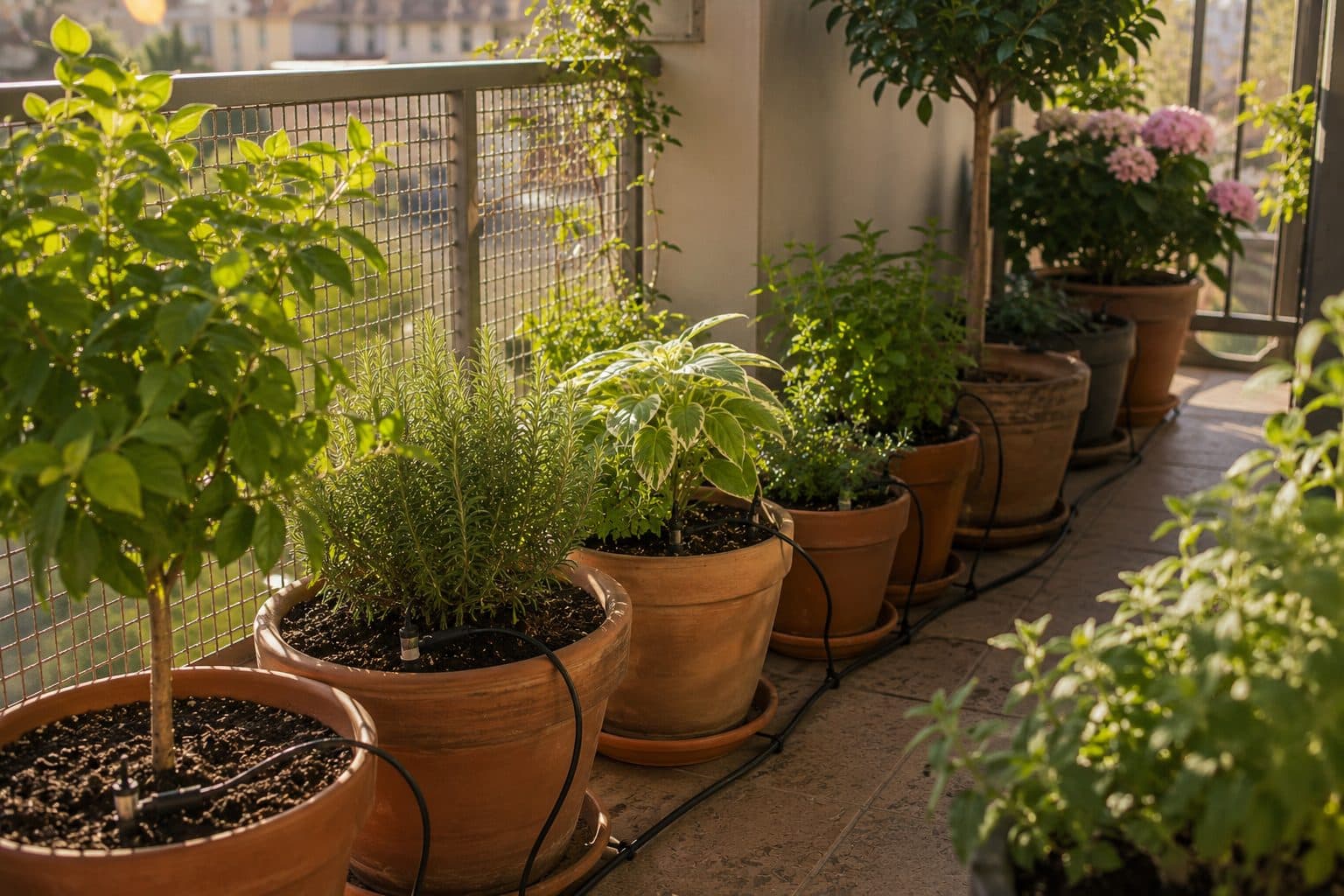
- Self-watering pots with a reservoir. These have a built-in tank that keeps the soil moist for days or weeks, ideal for those who travel often.
Whatever system you choose, test it in advance: the flow rate depends on the soil and the climate, and a trial run avoids nasty surprises. Outdoors, on a very sunny balcony, consider asking a neighbour to check halfway through: no DIY system easily withstands weeks of full sun and wind.
How Greenkeep helps you in summer
In summer the challenge isn't just watering, but adapting your rhythm to a need that changes quickly. Greenkeep takes the season into account: watering reminders come closer together as temperatures rise, so you don't get stuck with a now-unsuitable winter schedule.
When you go away, the holiday mode lets you plan your absence: you record when you'll leave the plants and when you'll be back, and the app suggests what to do before you leave (a generous watering, moving to shade, a self-watering system).
Gemma, the built-in assistant, can recommend the most suitable solution based on your plants and the length of the trip, for example whether a single watering before departure is enough for that species or whether it's better to set up a capillary cord. The idea is to take away the stress of the decision, while leaving you the final say.
Other typical summer problems
Yellow leaves or dry tips
Heat accentuates both excesses and shortages of water. Yellowing leaves often indicate soil that's too wet or struggling roots; dry, brown tips usually signal air that's too dry, soil that has run into a water deficit, or a build-up of salts. First and foremost, correct the watering rhythm and the exposure. To dig deeper, there's a dedicated guide to yellow leaves.
Gnats in the soil
The constant humidity of summer encourages fungus gnats (sciarids), whose larvae live in the moist surface layer. Letting the top of the soil dry out well between waterings breaks their cycle; yellow sticky traps and less frequent watering help without resorting to chemical products.
Summer feeding
During active growth many plants appreciate regular but light feeding, with organic products at diluted doses. Stop feeding, however, shortly before a long absence: a plant under water stress or in relative darkness doesn't make use of the nutrients and risks accumulating salts in the soil. Resume when you return, once conditions are back to normal.
Let AI tell you exactly what to do
Join the waitlist: species ID, diagnosis and the Gemma assistant, with the lifetime founder discount.
Keep reading
Frequently asked questions
For a few days a generous watering before you leave and moving the plants to a cool, shaded spot is enough. For longer absences use a self-watering system: a capillary cord connecting a water container to the soil, a tray with capillary action from below, or pots with a reservoir. Always test the system a few days beforehand.
In August the water need is usually at its peak, but there's no fixed frequency: it depends on the species, pot and exposure. Check the soil with your finger and water deeply when it's dry below the first few centimetres, preferably in the morning. Succulents remain an exception and want well-dried substrate.
Yes, but gradually to avoid scorching: the first few days in partial shade, then increase the exposure. On very sunny balconies group the pots, use light-coloured containers and water in the morning or evening. Direct, scorching midday sun can burn many leaves.
It can work for short absences, but the flow rate is unpredictable: sometimes it empties too quickly. It works better with terracotta cones that meter the flow. In any case, try it before you leave and, for long periods, prefer a capillary cord or a pot with a reservoir.
Better not. Feeding is done during active growth with diluted organic products, but should be stopped before a long absence: a plant under water stress doesn't use the nutrients and risks accumulating salts in the soil. Resume when you get back.
Sources
Related guides
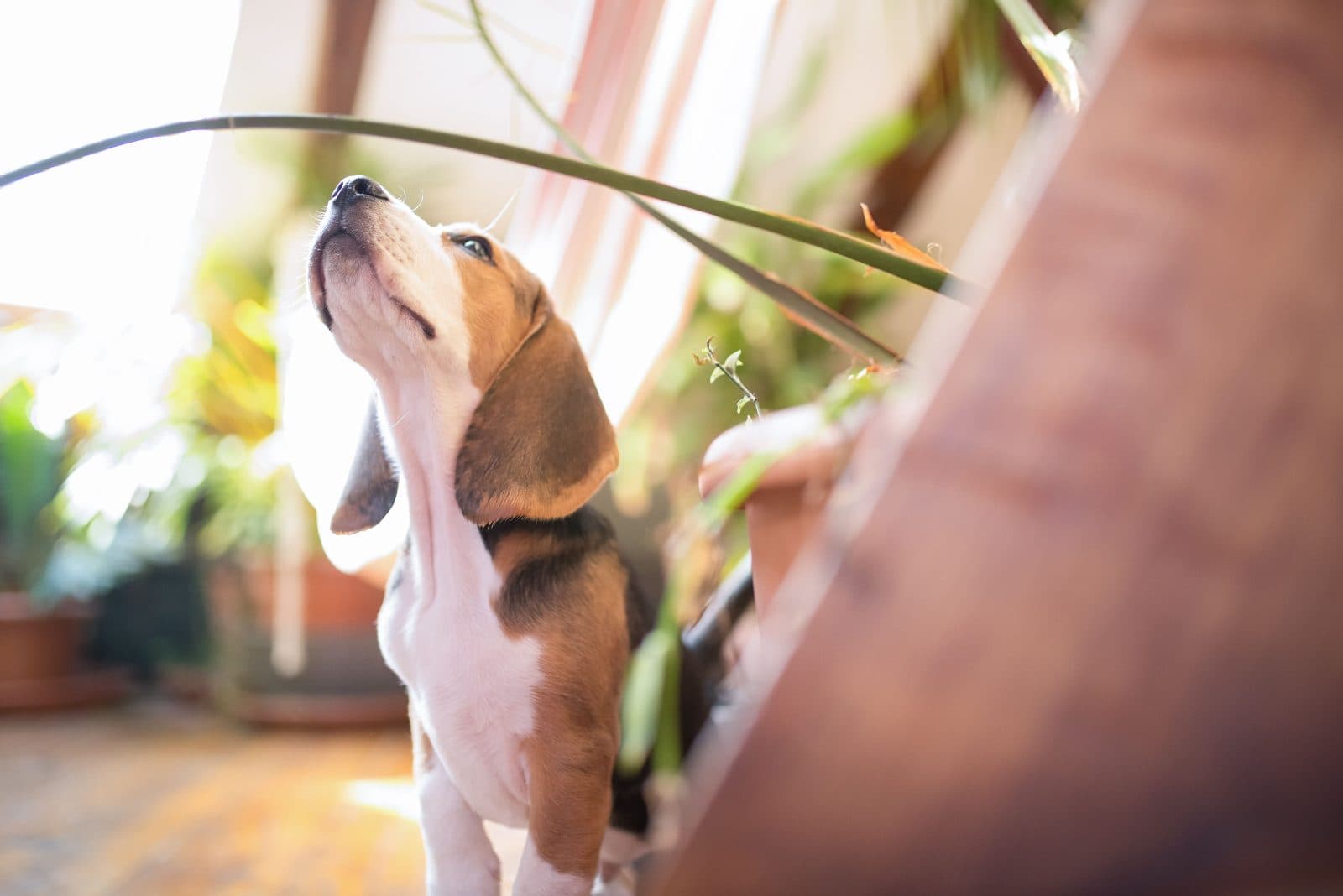 Plants & pets
Pet-Safe Houseplants for Cats and Dogs
A practical guide to choosing non-toxic houseplants if you live with a cat or a dog, with the safest species and the behaviours to keep an eye on.
Read the guide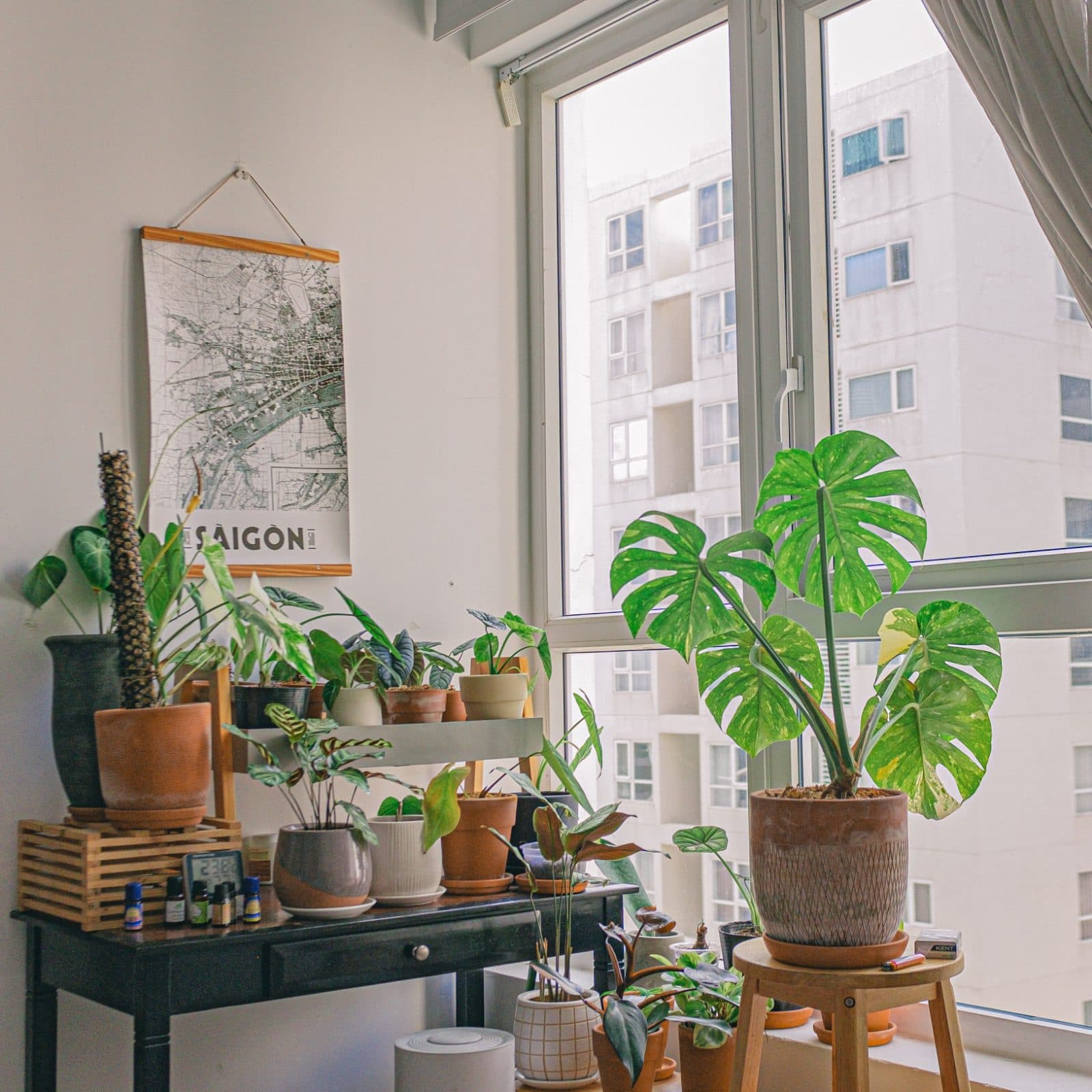 Choosing & buying
Air-Purifying Houseplants: What the Science Really Says
Which plants actually improve the air in your home and what the research really says, somewhere between the NASA myth and reality. An honest list to help you choose well.
Read the guide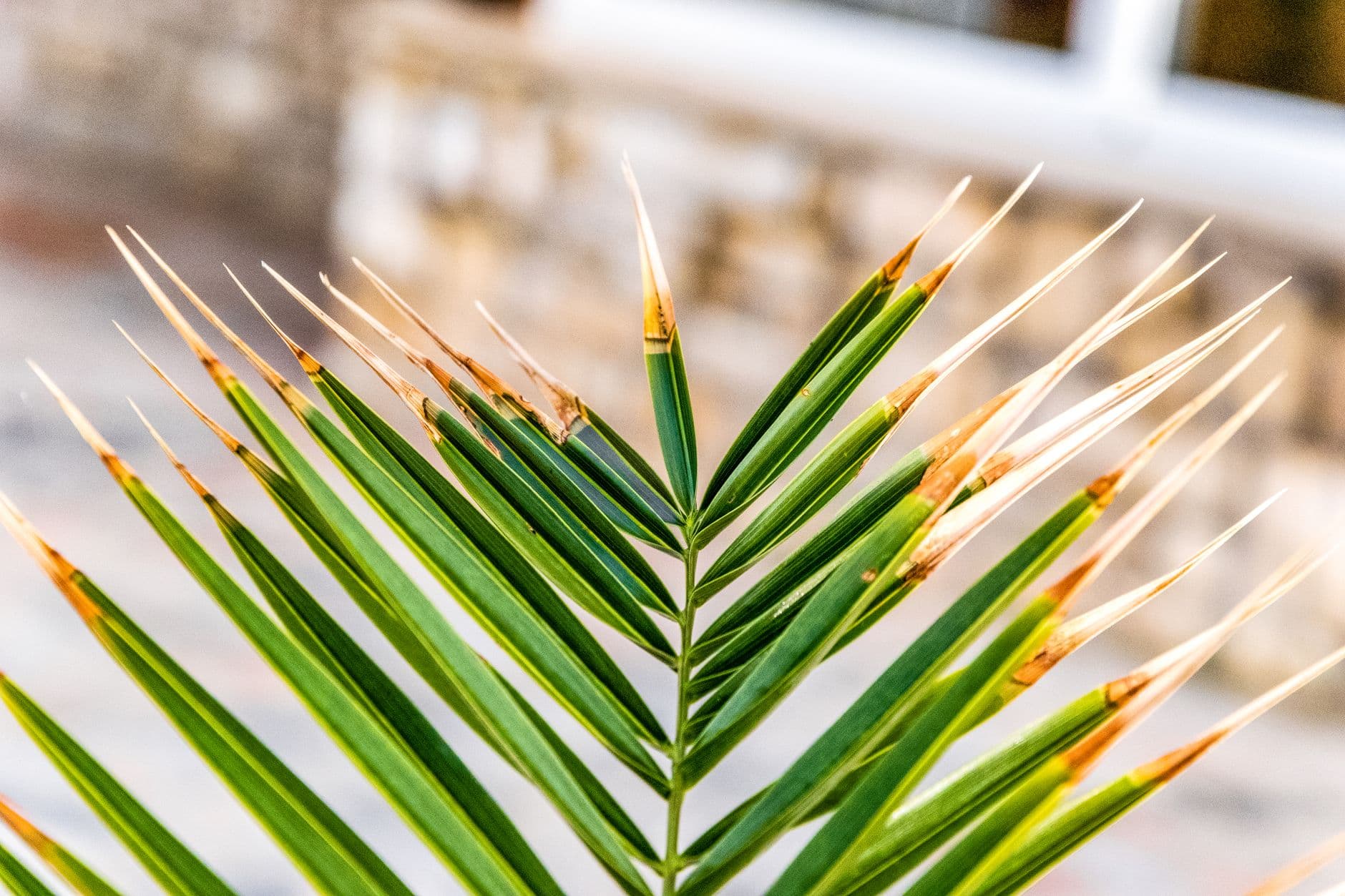 Diagnosing problems
Dry, Brown Leaf Tips: What They Mean
Dry, brown leaf tips often tell a story of air that's too dry, uneven watering or a build-up of salts. Here's how to read the symptom and put things right naturally.
Read the guide