
Dry, Brown Leaf Tips: What They Mean
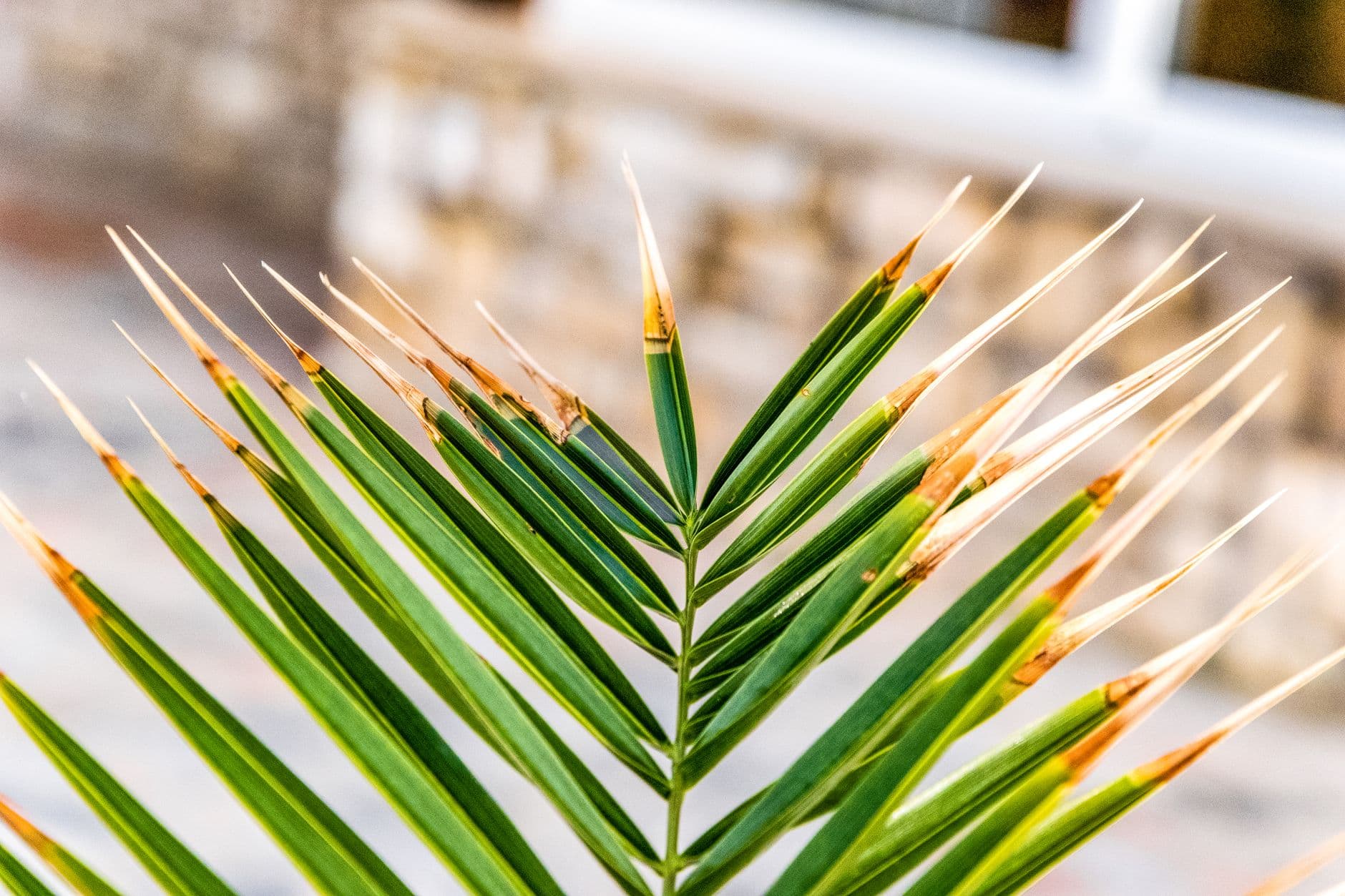
Photo by Matej Bizjak
A brown, dry tip on an otherwise green leaf is one of the most common signals houseplants send us. It's rarely an emergency, but it's almost always a symptom of something you can fix. The good news is that, once you understand the cause, the remedy is usually simple and doesn't call for chemicals. The bad news is that the same appearance (brown, crispy tips) can arise from different reasons, from air that's too dry to overfertilising, right through to watering mistakes. In this guide we'll look at how to tell the causes apart and what to do in practical terms.
What a brown, dry tip indicates
When the tip of a leaf turns brown, dry and brittle to the touch, it means that tissue has died from localised dehydration. The tip of the leaf is the part farthest from the roots and the main veins, so it's the first to suffer when water doesn't reach it in sufficient quantity, or when salts build up and draw water out of the cells.
A few details help you read the symptom:
- Just the tip, with a clean edge and perhaps a yellow halo: typical of water stress or dry air.
- Brown tips and margins spread across many leaves: often too much fertiliser or water that's too hard (a build-up of salts and minerals).
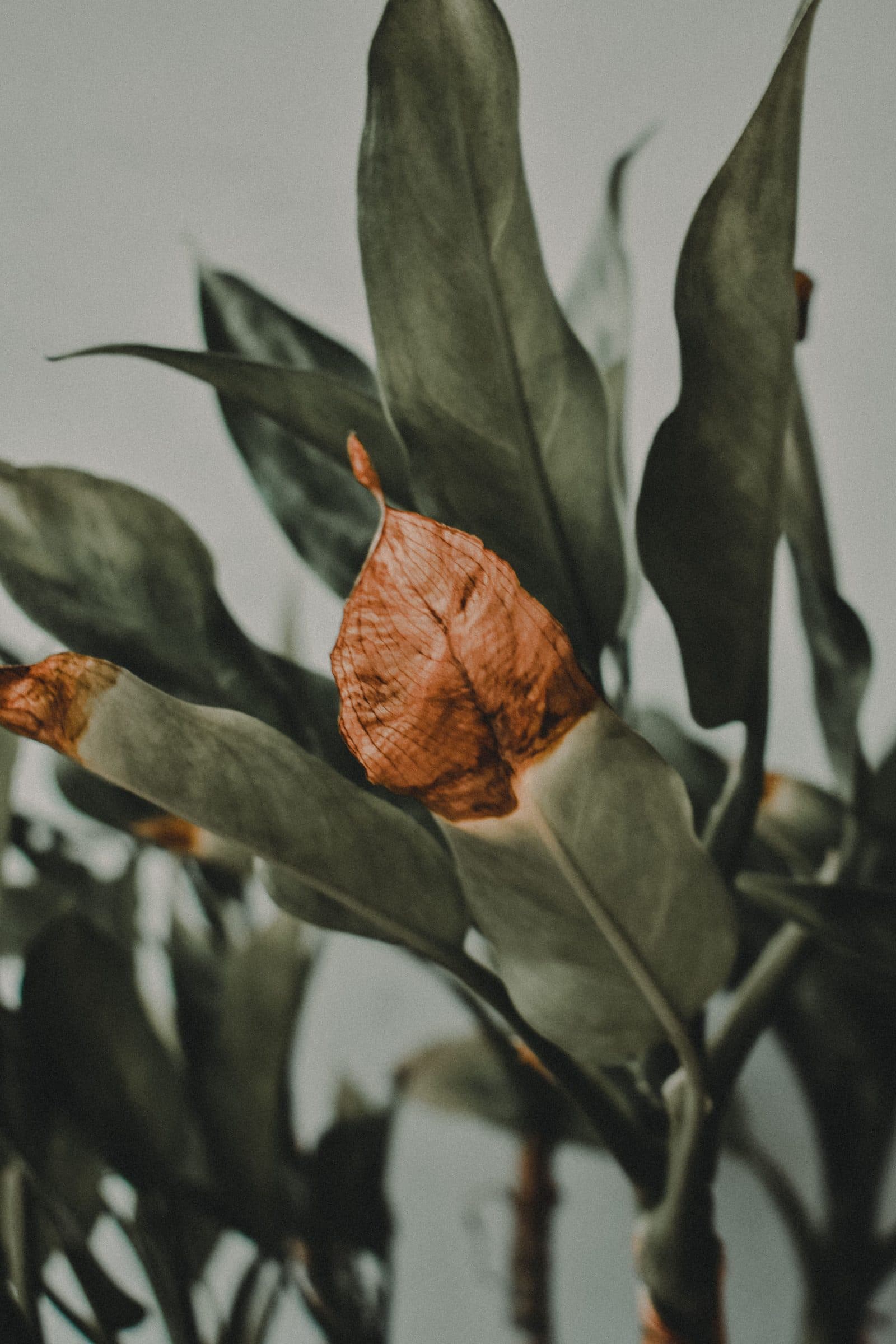
- Brown patches in the middle of the leaf too: that changes things: here sunburn from direct light, fungi or waterlogging can come into play.
A leaf doesn't turn green again once it has dried out: dead tissue stays dead. The aim, then, is to stop the cause, not to recover the individual tip.
Dry air: the number one cause indoors
Many popular houseplants come from humid tropical environments, where relative humidity often exceeds 60-70%. Indoors, especially in winter with the radiators on, the air can drop well below 40%. In these conditions the leaf loses water through transpiration faster than the roots can supply it, and the tips pay the price.
Signs it's a humidity problem
- The tips dry out mainly in winter or near heat sources.
- The soil feels moist to the touch, but the tips dry out anyway.
- Several different plants in the same room are affected.
How to raise humidity effectively
- Group your plants together: placed close together they create a more humid microclimate around the leaves.
- Use a tray with expanded clay and a finger's depth of water, keeping the bottom of the pot above the water line (not sitting in it).
- Move plants away from radiators and from currents of warm, dry air.
- A humidifier is the most stable solution for the more demanding species.
Misting the leaves gives only temporary relief and needs to be repeated often: it helps more as a habit than as a definitive fix. To manage the problem in winter you'll find targeted advice in the guide on how to care for houseplants in winter and with radiators.
Want a care plan tailored to your plants?
Join the waitlist: species ID, diagnosis and the Gemma assistant, with the lifetime founder discount.
Air humidity or watering: don't mix them up
These are two different things that are often confused, and this leads to the wrong action (for example, watering more a plant that's only suffering from dry air, ending up causing rot).
- Air humidity: how much water is present in the atmosphere around the leaves. It concerns what the plant loses through transpiration from its above-ground parts.
- Watering: how much water reaches the roots through the soil.
A plant can live in perfectly moist soil and still have dry tips because the air is too dry. Conversely, irregular watering (soil that swings from soaking wet to bone dry) stresses the roots and also produces brown tips.
How to tell them apart in practice
- Check the soil by pushing a finger in a few centimetres. If it's constantly dry, the problem is watering.
- If the soil is regularly moist but the tips dry out anyway, look at air humidity and proximity to heat sources.
- Watch the rhythm: tips that worsen in winter or near the radiator point to the air; leaves that flop and then dry out point to water.
To set the right watering rhythm, take a look at how often to water houseplants. If, instead, the leaves go soft and droopy rather than dry, the picture is different: we cover it in soft, drooping leaves.
Salts, hard water and too much fertiliser
When the margins and tips of many leaves turn yellow and then brown in a widespread way, the cause is often a build-up of salts in the soil. They come from feeding too often or from very hard tap water. Excess salts hinder the roots' ability to absorb water and burn the leaf tips.
What to do:
- Cut back or suspend feeding, especially in autumn and winter when growth slows. When you resume, use organic fertilisers diluted more than recommended.
- Flush the soil every few months: run plenty of water through the pot for a few minutes, letting it drain completely. This helps carry away the accumulated salts.
- Use rainwater, distilled or demineralised water for the more sensitive species (such as calatheas and ferns): letting tap water stand only lets the chlorine evaporate and does not remove hardness, salts or fluoride.
If you notice a whitish crust on the surface of the soil or on the rim of the pot, it's a clear sign of excess salts.
Specific cases: monstera and spider plant
Monstera
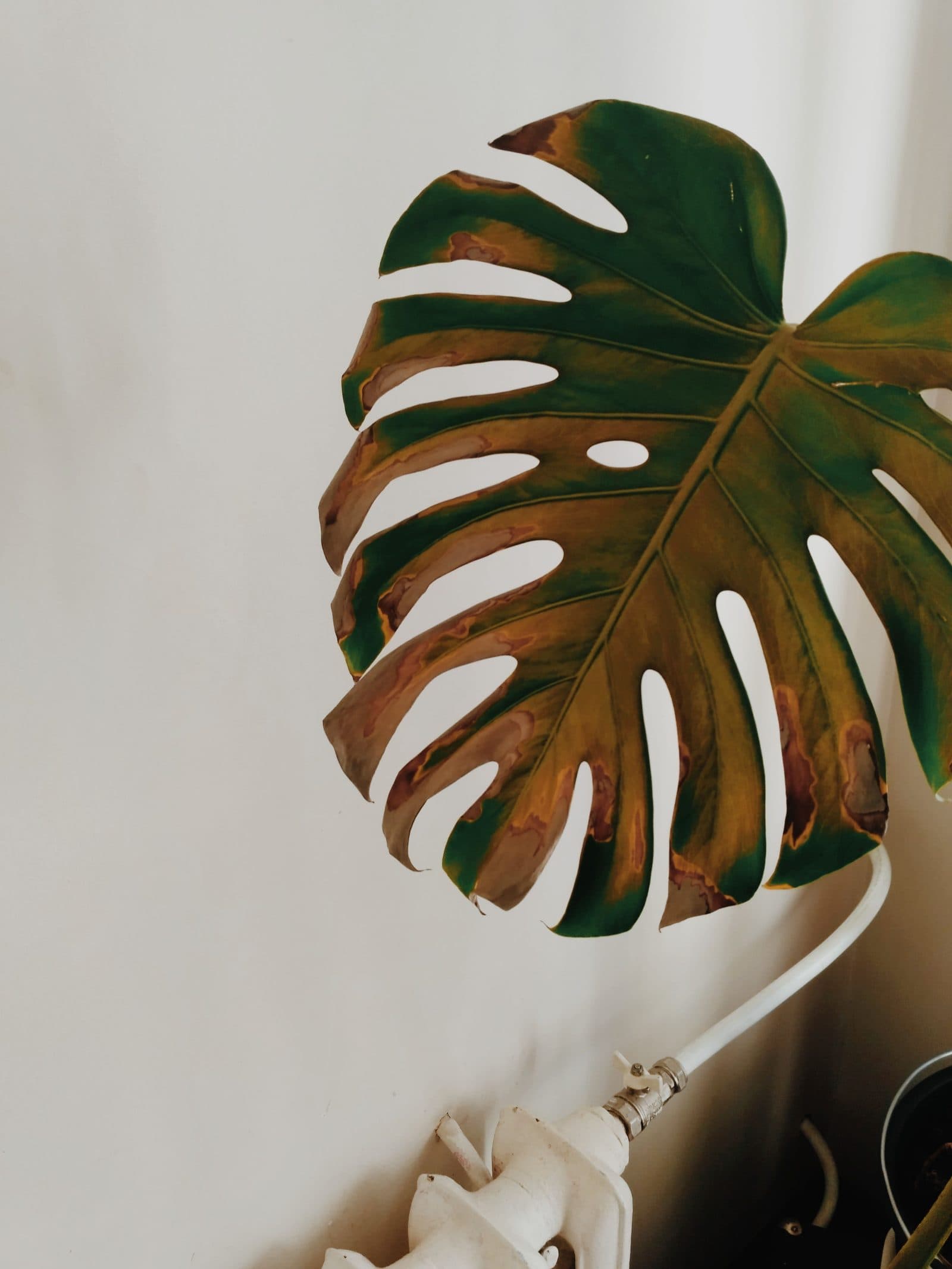
In monstera, dry tips usually appear when the air is too dry or when watering is irregular. It's a tropical plant that likes good humidity and soil that dries out at the surface between waterings, without ever going completely dry or staying soaking wet. A pot without a drainage hole, or a saucer always full of water, can also lead to root stress and brown tips. You'll find all the details in the dedicated guide on how to care for Monstera deliciosa.
Spider plant (Chlorophytum)
The spider plant is famous precisely for its brown tips, and it's a very common, easy plant. In its case the most frequent causes are hard water, too much fertiliser and dry air; where tap water is fluoridated, fluoride adds to them, and this species is particularly sensitive to it. It's quite tolerant, so a good starting point is switching to rainwater, distilled or demineralised water (letting tap water stand only lets the chlorine off, it removes neither hardness nor fluoride), cutting back on feeding and flushing the soil. Tips that have already dried out can be trimmed for cosmetic reasons (see below), but the real remedy is correcting the water quality and the humidity.
The spider plant is also among the species classified as non-toxic to cats and dogs according to the ASPCA, useful to know if you have animals at home: you'll find a broader list in houseplants safe for cats and dogs.
Remedies and everyday management
Once you've pinpointed the cause, here's how to act without resorting to chemicals:
- Fix the environment first of all: humidity, a position away from radiators, a regular watering rhythm.
- Trim the dry tips with clean scissors, following the natural shape of the leaf and leaving a thin margin of dry tissue so you don't cut into the living tissue. It's a cosmetic touch: it doesn't heal the plant, but it makes it tidier.
- Don't add water on instinct: if the cause is dry air, watering more risks rotting the roots.
- Keep track of what you change: by varying one thing at a time you'll more easily understand what works.
Here Greenkeep comes in handy in two ways. The photo diagnosis helps you tell whether those brown tips are down to dry air, watering or salts, by comparing the visible symptoms with the needs of the species. And when the cause is dry air, the app can set up reminders to check the humidity in the room, so you don't forget precisely in the winter months when the radiators make the air drier.
If you're just starting out and want an overview, begin with the plant care guide for beginners.
Let AI tell you exactly what to do
Join the waitlist: species ID, diagnosis and the Gemma assistant, with the lifetime founder discount.
Keep reading
Frequently asked questions
You can do it for cosmetic reasons, with clean scissors, following the shape of the leaf and leaving a very thin margin of dry tissue to avoid cutting into the living tissue, which would react by drying out further. Cutting, however, doesn't heal the plant: it only makes it tidier. The point is to correct the cause, otherwise new brown tips will appear.
They can depend on either. If the soil is regularly moist but the tips dry out anyway, especially in winter or near the radiators, the most likely cause is air that's too dry. If instead the soil swings from soaking wet to completely dry, it's a problem of irregular watering. Check the soil with your finger to work out which way to lean.
Only partly. Misting raises humidity around the leaves for a few minutes, so it needs to be repeated often to have a real effect. For more stable humidity, grouping the plants together, a tray with expanded clay and water, or a humidifier work better. Misting remains a good supporting habit.
In the spider plant the typical causes are hard or fluoride-rich water, too much fertiliser and dry air. Try using rainwater, distilled or demineralised water, cutting back on feeding, and flushing the soil now and then to remove the accumulated salts (letting tap water stand removes only chlorine, not the hardness or fluoride). It's a tough plant, so it usually responds well to these measures.
No. Watering concerns the water that reaches the roots through the soil, while air humidity is how much water there is in the atmosphere around the leaves. A plant can have moist soil and dry tips because the air is too dry. Confusing the two often leads to overwatering, with the risk of rotting the roots.
Sources
Related guides
 Plants & pets
Pet-Safe Houseplants for Cats and Dogs
A practical guide to choosing non-toxic houseplants if you live with a cat or a dog, with the safest species and the behaviours to keep an eye on.
Read the guide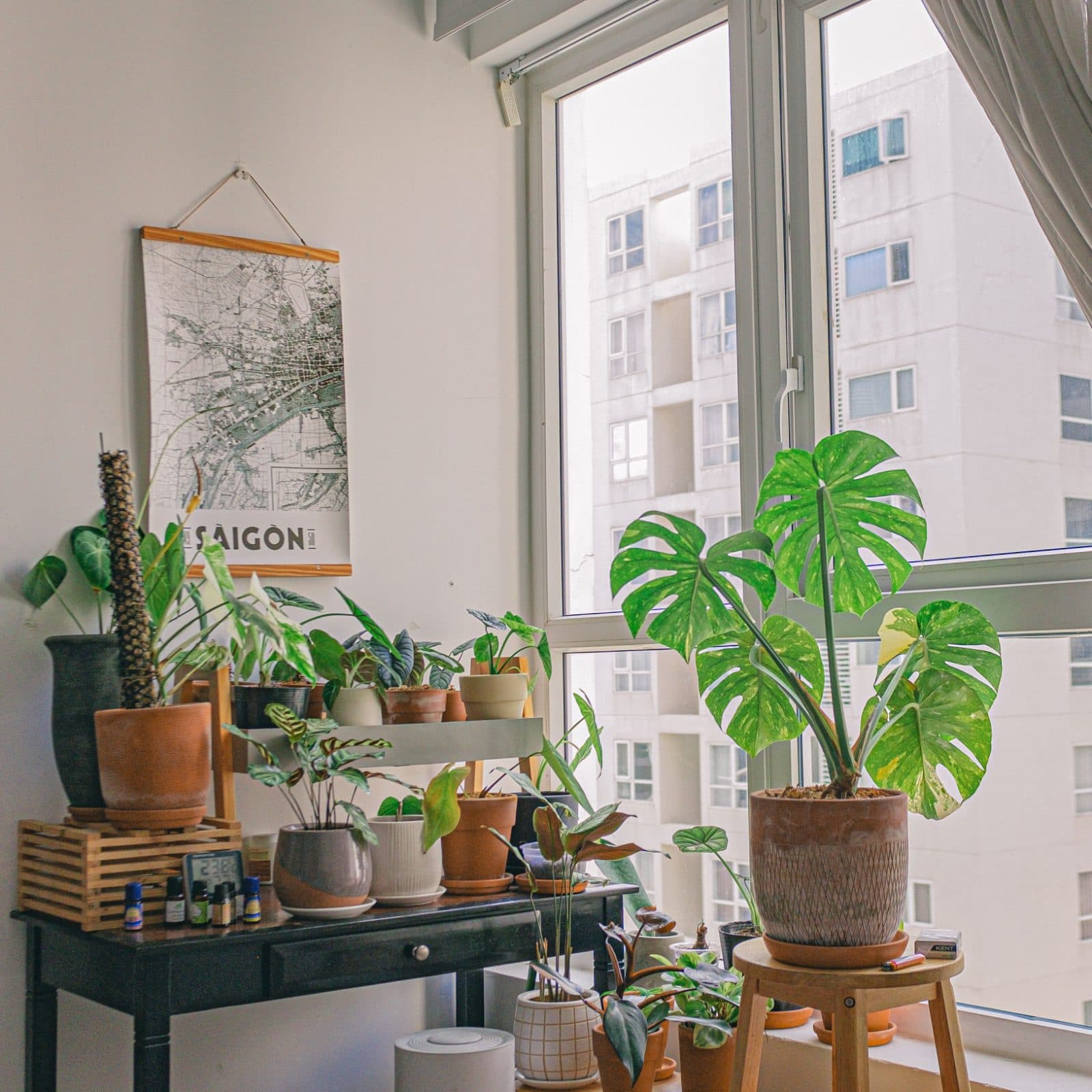 Choosing & buying
Air-Purifying Houseplants: What the Science Really Says
Which plants actually improve the air in your home and what the research really says, somewhere between the NASA myth and reality. An honest list to help you choose well.
Read the guide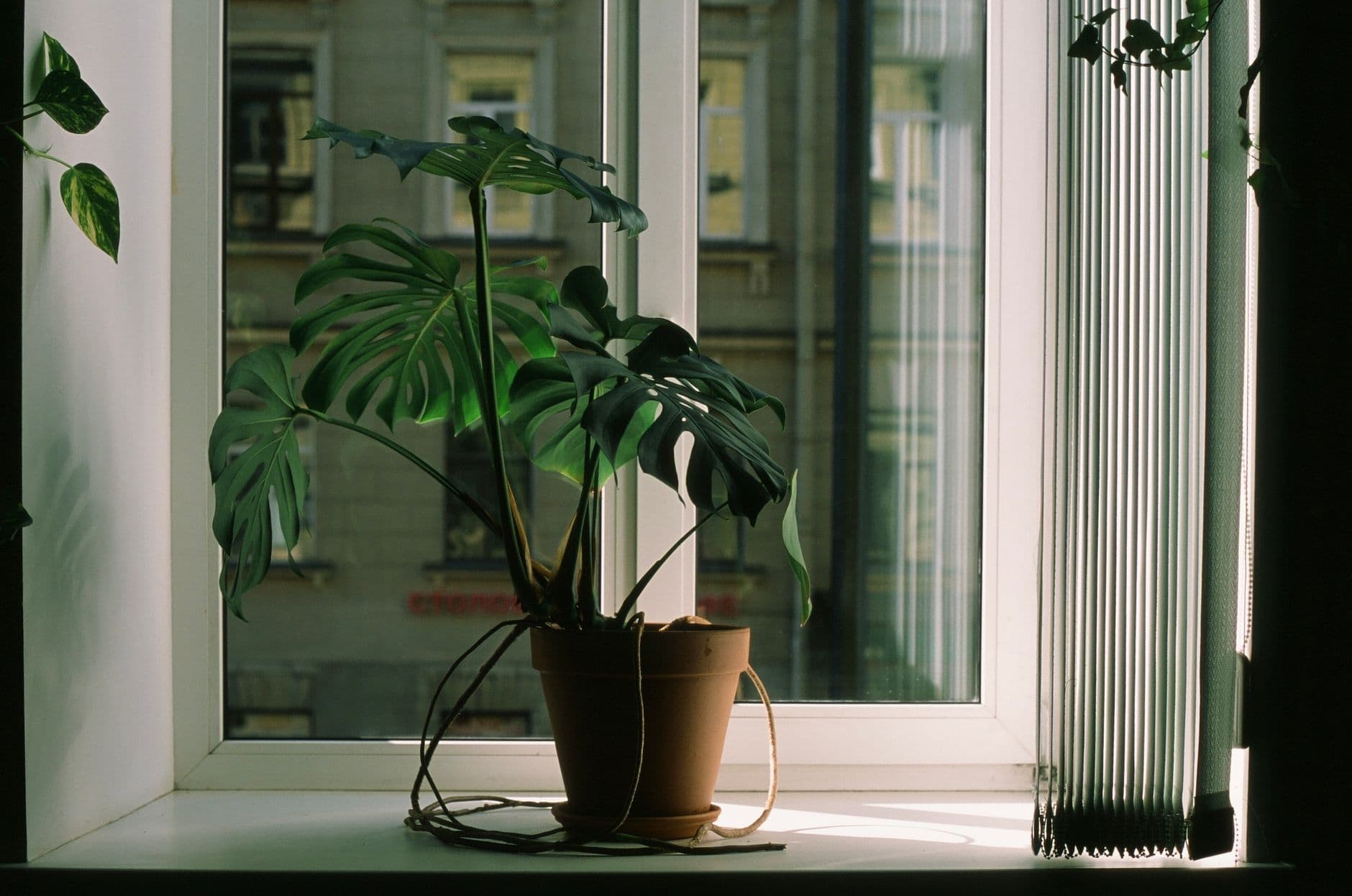 Diagnosing problems
Limp, Drooping Leaves: Too Much or Too Little Water?
Limp, drooping leaves can be caused by both too much and too little water. Here's how to tell the two cases apart and how to step in without harming the plant.
Read the guide