
How to Propagate Houseplants in Water from Cuttings
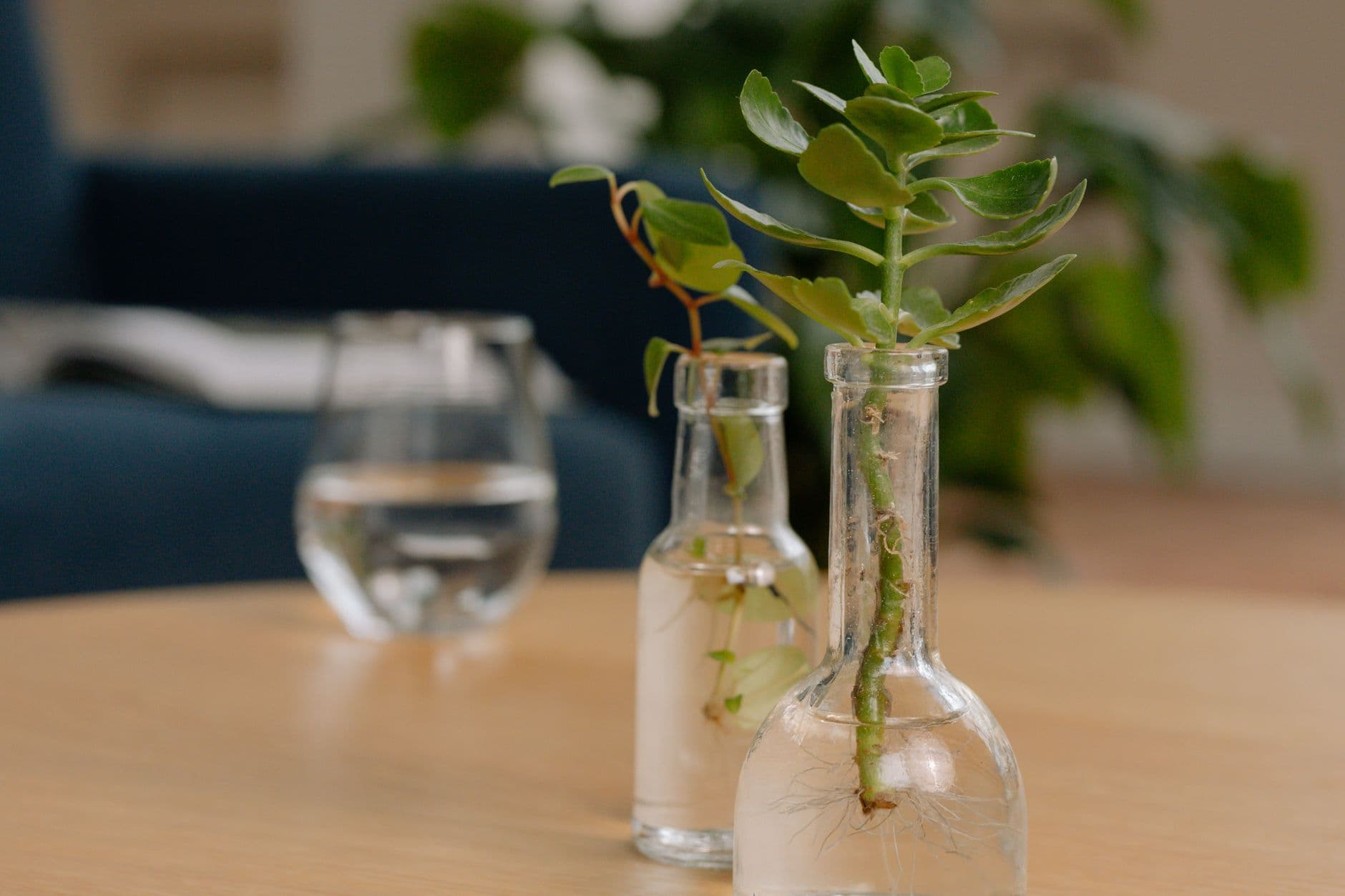
Photo by cottonbro studio
Propagating plants in water is one of the easiest and most rewarding ways to multiply what you already have at home, without spending a thing. All you need is a glass jar, a pair of clean scissors and a little patience. Rooting in water has the advantage of being visible: you can follow the appearance of the first roots day by day, which makes it perfect for beginners. In this guide we look at how to cut correctly, which plants are best suited to it, how long it takes and when it's worth moving on to soil.
Why water cuttings work (and which plants to choose)
Many houseplants are able to produce adventitious roots, that is, roots that sprout from the stem rather than from the original root system. By placing a portion of stem in water, you stimulate this natural response and obtain a new plant that is genetically identical to the mother.
Not all species respond in the same way. The easiest and most reliable in water are those with fleshy or climbing stems:
- Pothos (Epipremnum aureum): among the fastest and most generous, it almost always roots.
- Climbing philodendrons and monstera (for the latter see also the dedicated guide).
- Tradescantia and ivy.
- Begonias and pilea.
- Rosette-forming plants such as the spider plant (Chlorophytum), which produces small plantlets that are already ready to go.
Succulents and cacti, on the other hand, prefer to let the cut dry and root in soil: in water they tend to rot. Many woody-stemmed species also give uncertain results in water.
A reminder about safety: pothos, philodendron and monstera are classified as toxic to dogs and cats by the ASPCA because of the calcium oxalate crystals they contain. The cuttings and the rooting water should be kept out of reach of pets.
The cut: where and how, below the node
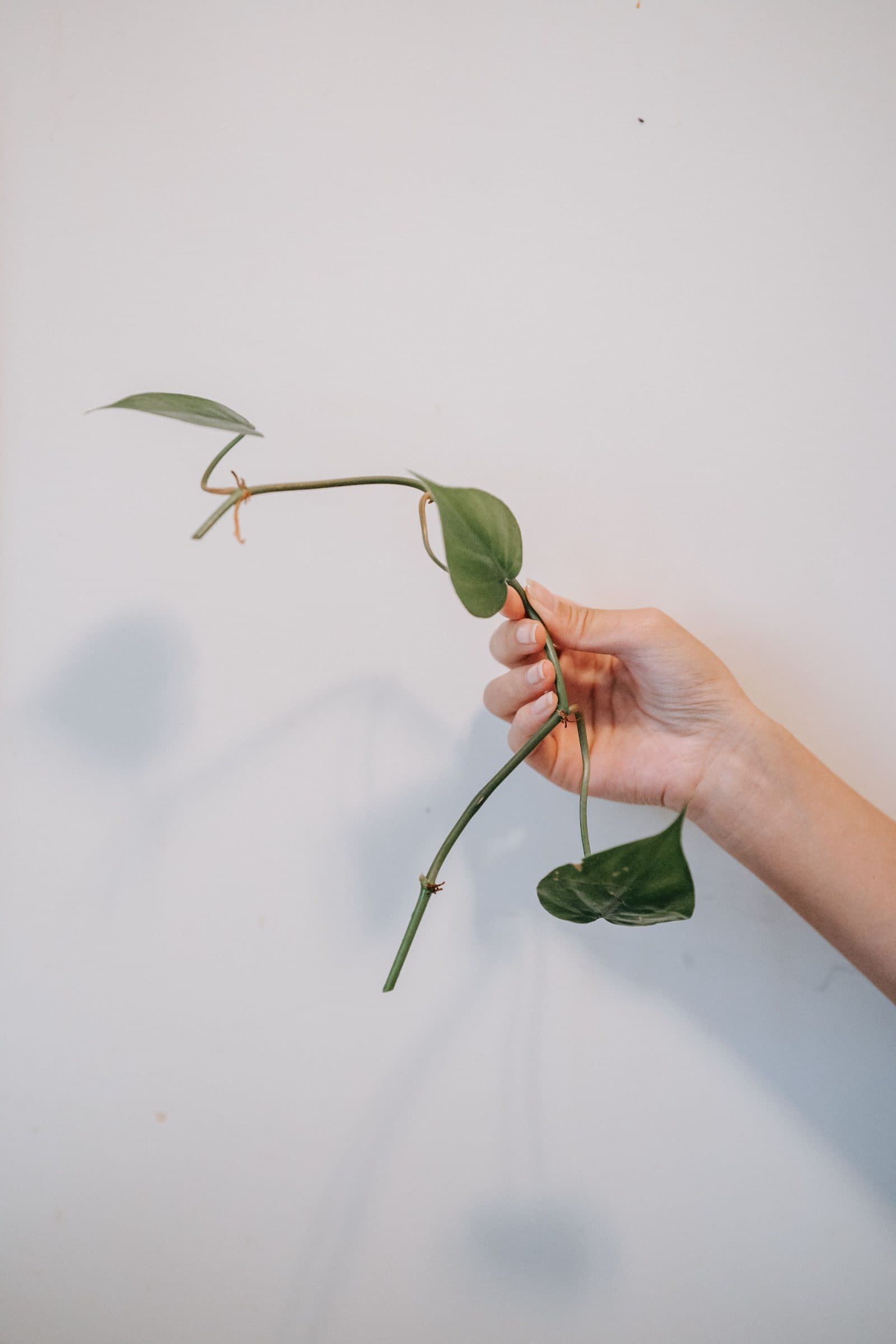
The key to all propagation is the node: that small swelling on the stem from which leaves, side shoots and, above all, roots emerge. Without a node, a cutting in water will hardly root at all.
How to make the cut correctly
- Find a healthy stretch of stem with at least one or two nodes.
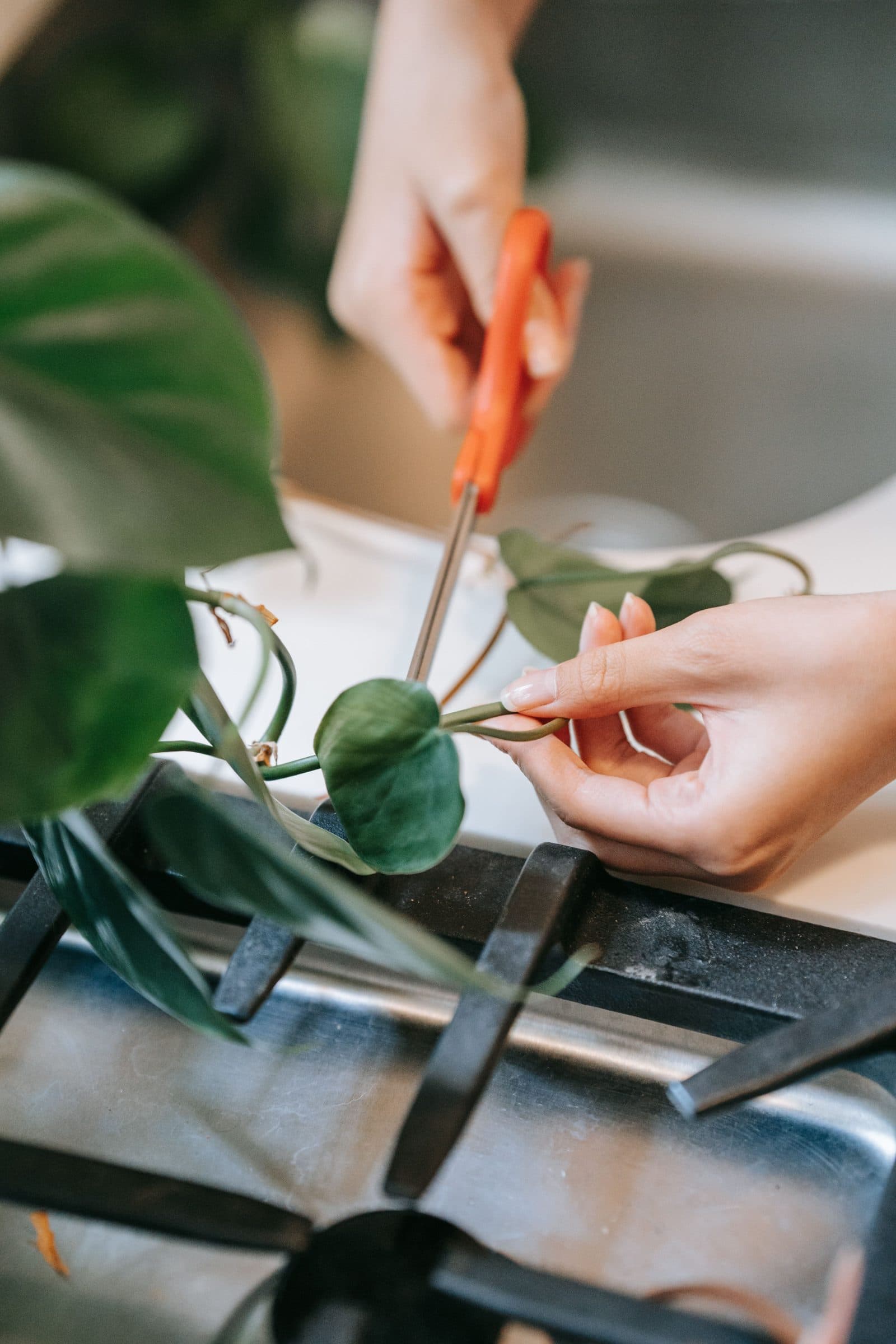
- Cut about half a centimetre below the node, with a clean, slightly angled cut.
- Use sharp scissors or a knife that have been disinfected (alcohol or boiling water): clean cuts reduce the risk of rot.
- Remove the lower leaves, the ones that would end up underwater. Leave at least one or two leaves on the upper part, which the plant needs to produce energy.
In the case of pothos, a good cutting has two or three leaves and at least one submerged node. On climbing plants you can often already spot small brown bumps on the nodes: these are aerial roots waiting to develop, and they are an excellent sign.
No chemical rooting hormone is needed: for the easy species water alone is enough. If you want to give the plant a hand, you can change the water regularly to keep it oxygenated and clean.
Want a care plan tailored to your plants?
Join the waitlist: species ID, diagnosis and the Gemma assistant, with the lifetime founder discount.
Setting up the jar and managing the water
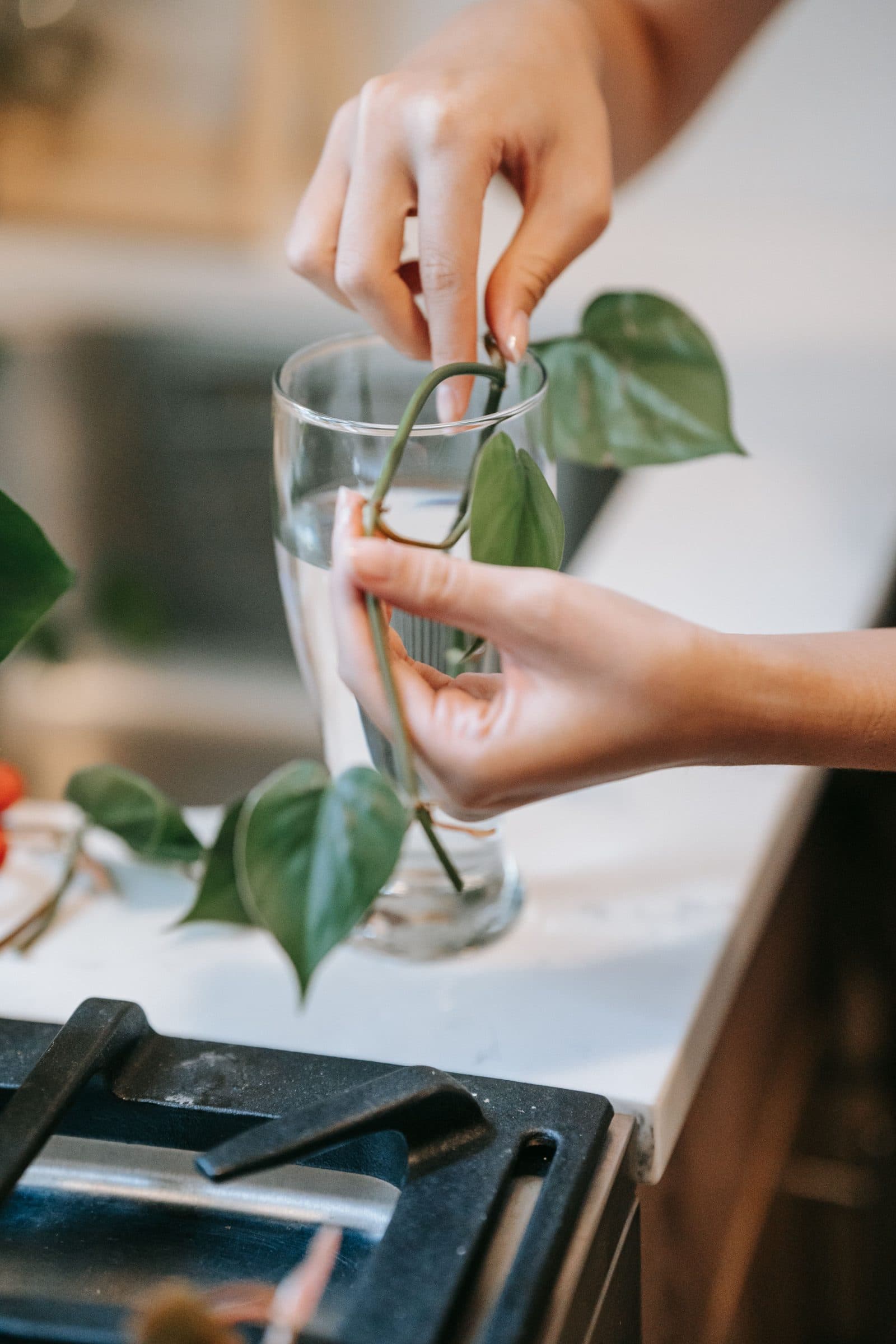
A clear glass container is ideal, because it lets you keep an eye on the roots and the water. Here's how to go about it.
- Room-temperature water: cold tap water can stress the cutting. If your water is very hard, let it sit for a few hours or use rainwater.
- Submerge only the node, not the leaves: leaves underwater rot and foul the water.
- A bright spot but without direct sun: a window with filtered light works perfectly. Full sun overheats the water and encourages algae.
- Change the water every 3-5 days, or as soon as you see it turning cloudy. Fresh water means more oxygen and fewer bacteria.
If you notice a green film on the walls of the jar, that's algae, harmless but unsightly: rinse the container and move it to a slightly less intense light. An unpleasant smell or a soft, dark stem, on the other hand, indicate rot: in that case cut away the spoiled part, refresh everything and start again.
Multiplying plants in water is also a concrete way of multiplying your plants for free: from a single mother plant you can take several cuttings and, within a few weeks, just as many new plants to keep or give away.
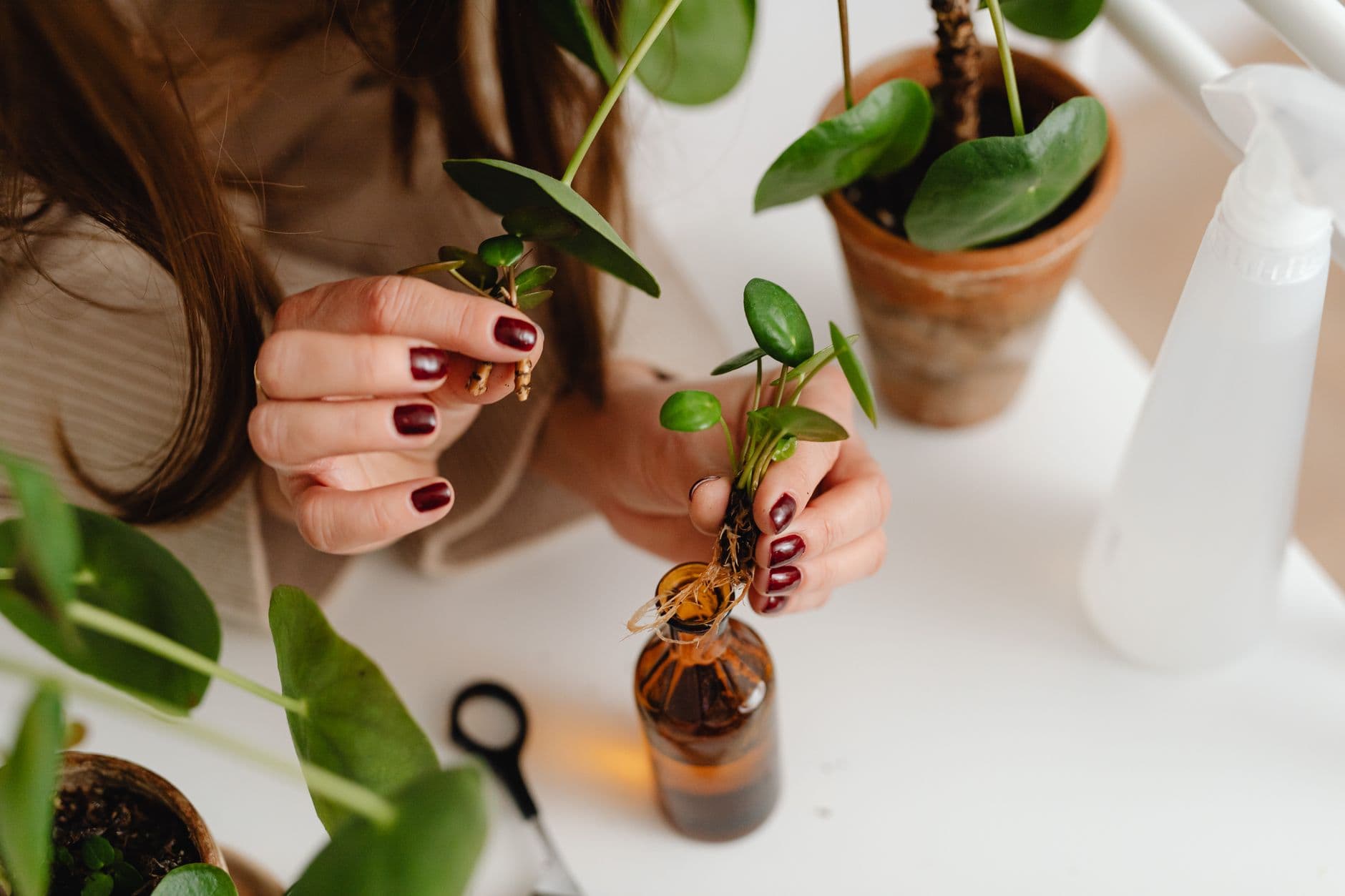
When the cutting roots and what to expect
Timing varies a great deal depending on the species, the season and the temperature. In general:
- Pothos, tradescantia, ivy: the first roots often appear within one or two weeks.
- Philodendrons and monstera: usually from two to four weeks.
- Slower species can take a month or even longer.
Propagation works best during the growing season, in spring and summer, when plants are more active and there is more light. In winter everything slows down and some cuttings can stay dormant for weeks.
The first roots are white, thin and fragile. Wait until they reach at least 3-5 centimetres and until there are more than one or two before thinking about potting up. Roots that are too short can't yet support the plant in soil.
Bear in mind that roots grown in water are different from those that form in soil: they are softer and will have to adapt once planted. For this reason it's best not to wait until they become very long, otherwise the transition will be harder.
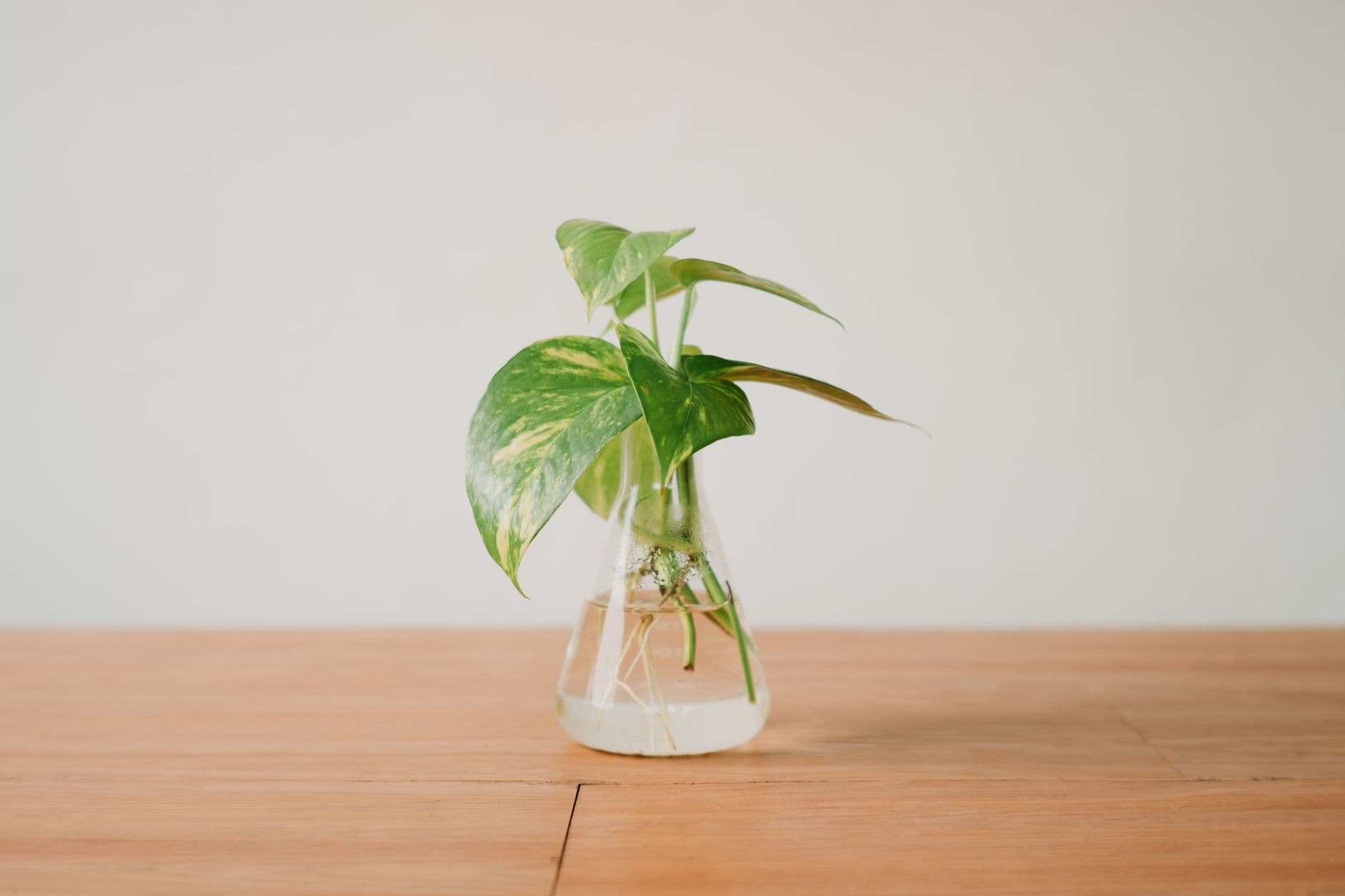
Water or soil cuttings: which is better
Both methods work, and the choice depends on the plant and your own preferences.
In favour of water
- You see the roots grow, which is useful for understanding timing and learning.
- Less risk of forgetting to water.
- Perfect for pothos, philodendrons and other easy climbers.
In favour of soil
- The roots form already suited to the substrate, with no adjustment phase.
- Preferable for succulents and cacti, which rot in water.
- Once rooted, the plant doesn't have to be moved.
For beginners, water remains the most reassuring method because everything is visible. Just keep in mind that the next step is inevitable: sooner or later the cutting rooted in water has to go into soil.
Potting up in soil
When the roots are a few centimetres long, fill a small pot with light, free-draining soil, make a hole, settle the roots in and gently cover them. For the first few days keep the soil slightly moist, never soggy, to help the roots that are used to water adapt. A substrate that is too wet and poorly aerated is also one of the factors that encourage fungus gnats, so don't overdo the water.
If you then want to keep track of the new plant born from the cutting, you can register it on Greenkeep: the assistant Gemma guides you step by step through the rooting times and reminds you when to check the roots and when to pot up, so you don't miss the right moment.
As the new plant grows and fills its pot, the next step is repotting: you'll find every step in how to repot a houseplant.
Let AI tell you exactly what to do
Join the waitlist: species ID, diagnosis and the Gemma assistant, with the lifetime founder discount.
Keep reading
Frequently asked questions
It depends on the species. Easy plants like pothos, tradescantia and ivy show their first roots within one or two weeks, while philodendrons and monstera generally take from two to four weeks. In spring and summer the timing is faster than in winter. Wait until the roots reach 3-5 cm before potting up.
For plants with fleshy or climbing stems like pothos, water is convenient because you see the roots grow and it's simple. For succulents and cacti soil is better, because in water they tend to rot. Keep in mind that cuttings rooted in water still have to be potted up in soil.
Cut about half a centimetre below a node, that is, the small swelling on the stem from which leaves and roots sprout. A good pothos cutting has two or three leaves and at least one node to submerge in water. Remove the lower leaves so they aren't left underwater.
The most common causes are submerged leaves that decompose, water changed too infrequently or a cut made with unclean tools. Change the water every 3-5 days, submerge only the node and use disinfected scissors. If the stem turns soft and dark, cut away the spoiled part and start again with fresh water.
Yes, it's one of the main advantages of water propagation. From a single mother plant you can take several cuttings and obtain just as many new plants without spending anything, to keep or give away. All you need is a jar, water and a little patience.
Sources
Related guides
 Plants & pets
Pet-Safe Houseplants for Cats and Dogs
A practical guide to choosing non-toxic houseplants if you live with a cat or a dog, with the safest species and the behaviours to keep an eye on.
Read the guide Choosing & buying
Air-Purifying Houseplants: What the Science Really Says
Which plants actually improve the air in your home and what the research really says, somewhere between the NASA myth and reality. An honest list to help you choose well.
Read the guide Diagnosing problems
Dry, Brown Leaf Tips: What They Mean
Dry, brown leaf tips often tell a story of air that's too dry, uneven watering or a build-up of salts. Here's how to read the symptom and put things right naturally.
Read the guide