
Choosing the Right Pot and Soil for a Balcony Garden
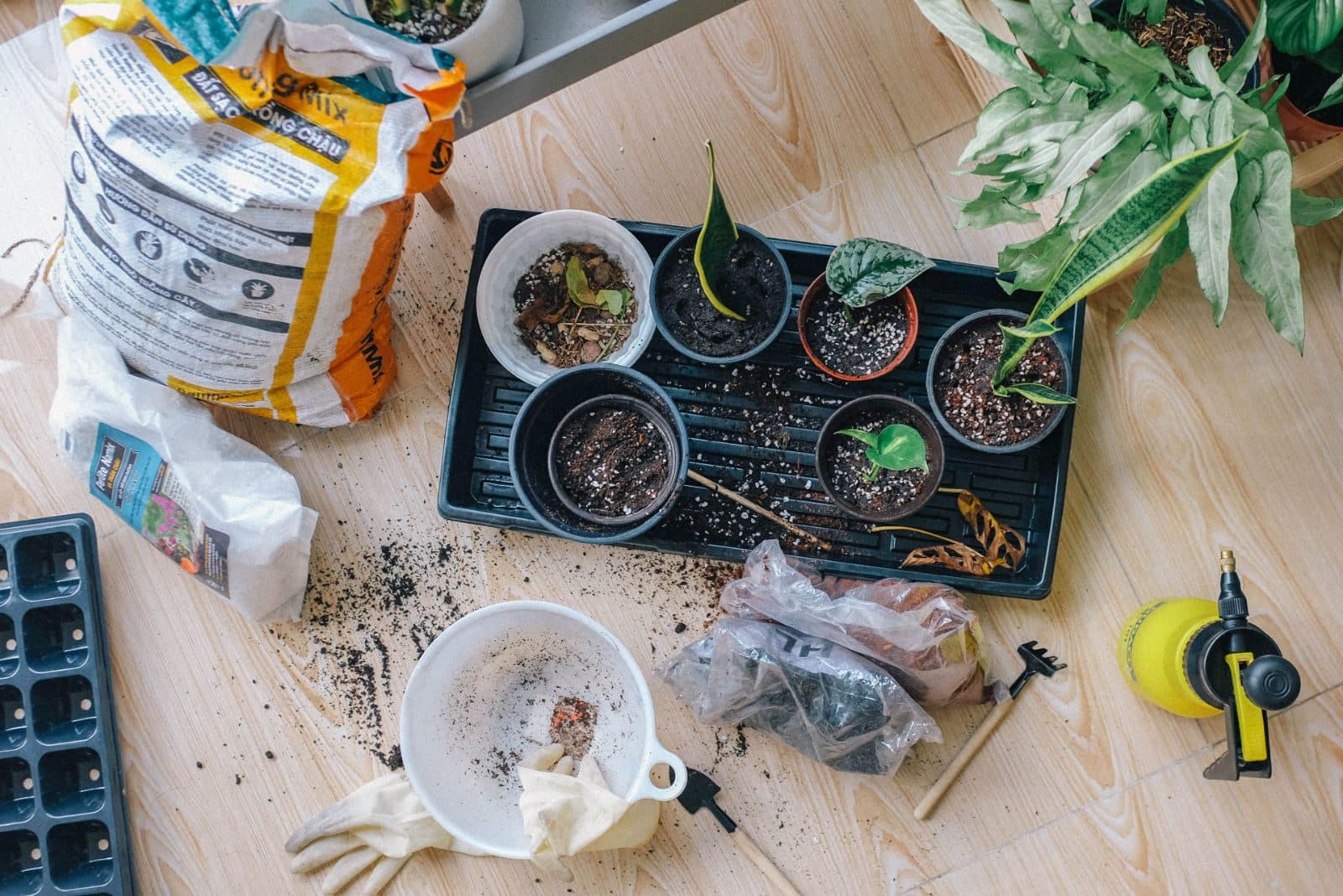
Photo by Huy Phan
The most useful rule in a few lines: choose pots that are as roomy as your space allows (more soil means more stable water and nutrients), make sure they have real drainage holes, and fill them with a good vegetable potting soil, not garden soil. Herbs and salad greens get by with little, while tomatoes want at least 25 to 40 litres each. The rest are details that make the difference between a stunted harvest and a satisfying one, and we'll go through them below.
Container and substrate are the two choices that shape everything else: how often you water, how much you feed, how far the roots can spread. Getting them wrong makes any later care difficult.
How Big the Pot Should Be for Each Vegetable
The right question isn't so much about diameter as about the volume of soil available to the roots. The more soil there is, the longer it holds moisture and nutrients, and the less the pot suffers the heat swings that are typical of a balcony.
A rough guide by capacity, useful as a starting point:
- Salad greens, rocket, radishes, small herbs (parsley, thyme, oregano): 5 to 10 litres, about 15-20 cm deep.
- Basil, cut-and-come-again chard, spring onions: 10 to 15 litres.
- Peppers, chillies, aubergines: 15 to 25 litres per plant.
- Carrots (short or half-long varieties): 10 to 15 litres, with at least 25-30 cm of depth.
- Tomatoes: 25 to 40 litres per plant (see below).
- Courgettes, cucumbers: at least 30-40 litres, ideally more.
- Dwarf French beans, strawberries: 10 to 15 litres.
One large pot is better than many tiny ones: minuscule containers dry out in half a summer day and put plants under constant stress. If you're short on space, go for continuous-harvest crops (cut-and-come-again salads, herbs) that do well even in little soil.
When you add your vegetables on Greenkeep, specifying the right container from the start helps the app build a realistic watering and feeding plan for the volume of soil you actually have.
Depth Matters: The Case of Tomatoes
The tomato has a root system that, given the chance, goes deep. In a pot it doesn't need field-sized roots, but a container that's too shallow limits it and forces it to dry out quickly.
For tomatoes, aim for at least 30 cm of depth, ideally 40, with a total volume of 25 to 40 litres per plant. Indeterminate varieties (the tall ones, to be tied to a support) call for the upper end of these figures; determinate cherry tomatoes or "balcony" types get by with less.
A handy trick at transplanting time: bury the seedling a little deeper than usual, covering part of the stem too. The tomato puts out adventitious roots along the buried stem, developing a more extensive root system and a more stable plant.
For other "root" or vigorous vegetables, depth matters almost as much as volume: carrots and radishes want loose soil that's deep enough to swell, while courgettes and cucumbers mainly need volume to cope with summer evaporation. If you're growing tomatoes it's worth reading the dedicated guide to tomatoes in pots too, where depth, supports and watering are covered step by step.
Want a care plan tailored to your plants?
Join the waitlist: species ID, diagnosis and the Gemma assistant, with the lifetime founder discount.
The Right Soil: Why Garden Soil Isn't Enough
In pots, don't use soil taken from a flower bed or the garden: it compacts, drains poorly, and can bring in weed seeds and pathogens. You need a specific vegetable or garden potting soil, or a good-quality all-purpose potting mix, with these features:
- A soft, airy structure that holds water while letting the roots breathe.
- Plenty of organic matter (compost, well-rotted manure, worm castings) as a basis for fertility.
- Good drainage: many vegetable potting soils already contain lightening materials such as coconut fibre or perlite.
If you start from a slightly heavy all-purpose mix, you can improve it by blending in mature compost (for fertility) and a portion of perlite or coconut fibre (for airiness). A simple starting mix: about two-thirds potting soil, one-third split between compost and drainage material.
Vegetables are heavy feeders and in pots they quickly use up the reserves. A few weeks after transplanting, it's worth supporting fertility with organic feeding: compost added to the surface, worm castings, plant teas or liquid organic vegetable fertilisers. On a balcony organic fertilisers cover the need well: they release more gradually and are less prone to overdosing than synthetic mineral ones.
A note on hygiene: moist soil rich in organic matter can attract fungus gnats (sciarids). Not watering more than necessary and letting the surface dry out between waterings is the first line of defence; yellow sticky traps help catch the adults in the meantime.
Drainage: Holes, the Saucer and That Famous Bottom Layer
Standing water is one of the most common problems in potted gardens: the roots rot and the plant yellows. Two things are truly essential:
- Drainage holes at the bottom. They must be there and they must be clear. A pot without holes, however pretty, is no good for vegetables.
- A soil that drains well, as described above.
And the layer of gravel or shards at the bottom? This is much debated. It isn't the miracle solution sometimes claimed, but it isn't completely useless either: in large pots or with heavy soils a draining layer of expanded clay can help; in small pots with a good substrate it adds little. What really matters is still the holes and the quality of the mix.
Some good practices:
- Cover the holes with a piece of mesh or a shard (not with material that blocks them), so the soil stays in but the water gets out.
- If you use a saucer, empty it after watering: water sitting for hours suffocates the roots. In summer a thin film of water in the saucer can help for a few hours on the hottest days, but don't leave it there permanently.
- Raise pots off the ground with feet or supports: this aids drainage and aeration.
If you notice soft or yellowing leaves, the cause is often too much water rather than thirst: before watering again, check with a finger that the top few centimetres of soil are really dry.
Self-Watering Pots: When They're Worth It
Self-watering pots (with a water reservoir) have a tank in the lower part from which the plant draws over time, usually by capillary action. On a balcony they can be very useful, especially in summer or if you're away from home for a few days.
When they're worth it:
- For thirsty vegetables like tomatoes, courgettes and cucumbers, which suffer from swings in soil moisture.
- If the balcony is hot and windy and normal pots dry out too quickly.
- If you water irregularly: the reservoir cushions the times you forget.
What to watch out for:
- They still need holes or an overflow: after heavy rain the excess water has to be able to escape, otherwise the substrate stays soggy.
- In the first weeks after transplanting the roots don't yet reach the reservoir: keep watering from the top until the plant has rooted well.
- They aren't ideal for herbs that like drier soil (rosemary, thyme, sage): they risk staying too wet.
So for Mediterranean herbs a classic, well-draining pot is often better; for the thirsty vegetables the reservoir is a good ally.
Pot Materials: Terracotta, Plastic, Fabric
The material affects how quickly the soil dries out and how much it heats up in the sun.
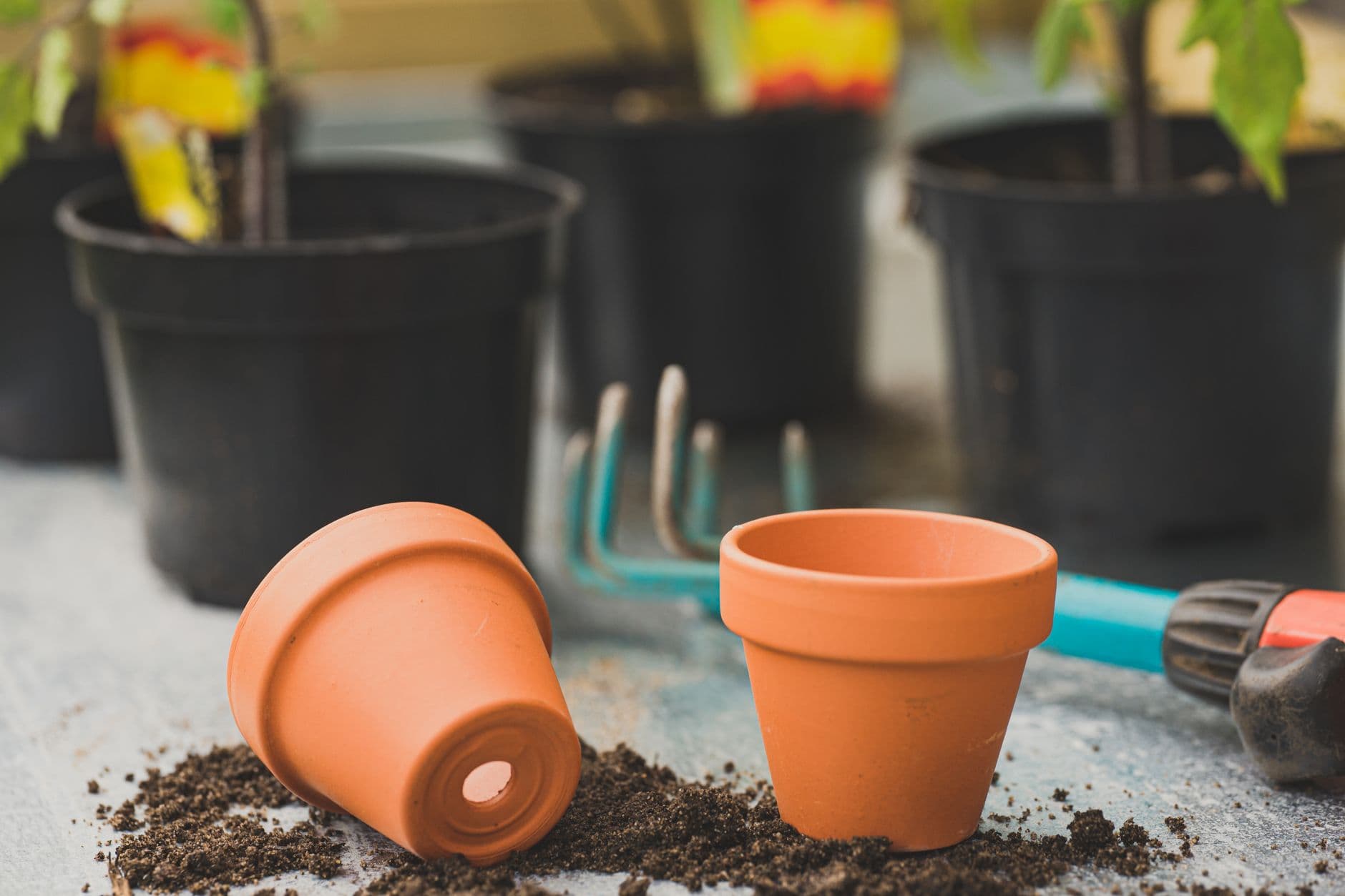
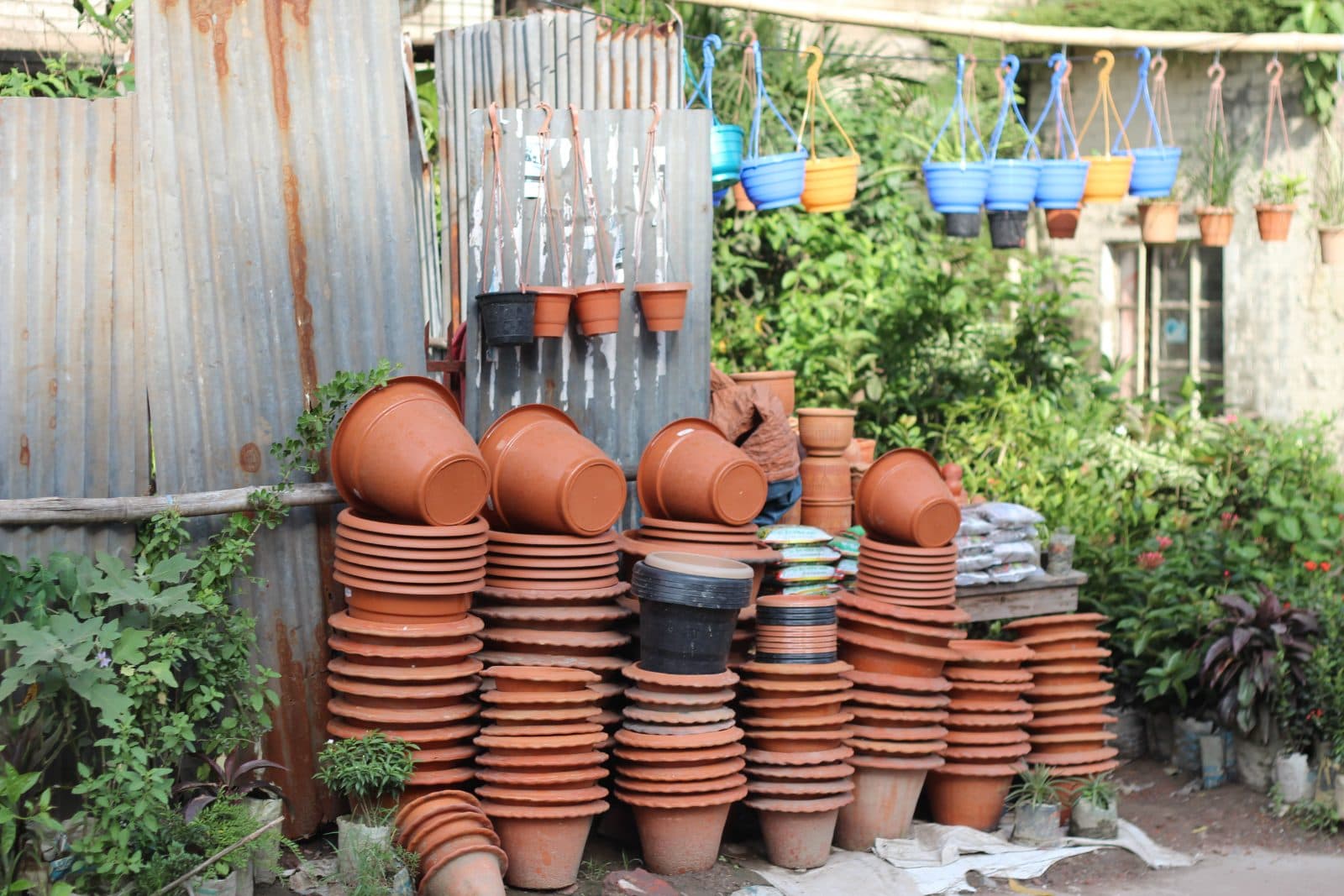
- Terracotta: attractive and breathable, but porous: it lets water evaporate through the walls, so the soil dries out sooner. Great for Mediterranean herbs that like it dry, less practical for thirsty vegetables in full sun. It's heavy and can crack in frost if left full over winter.
- Plastic: light, cheap, and holds moisture better. Perfect for tomatoes, courgettes and vegetables that drink a lot. Choose light colours to keep the pot from overheating in direct sun.
- Fabric pots (grow bags): they drain and aerate very well, and roots develop healthily. They dry out fast in summer, so they need watering more often; handy because they're light and foldable.
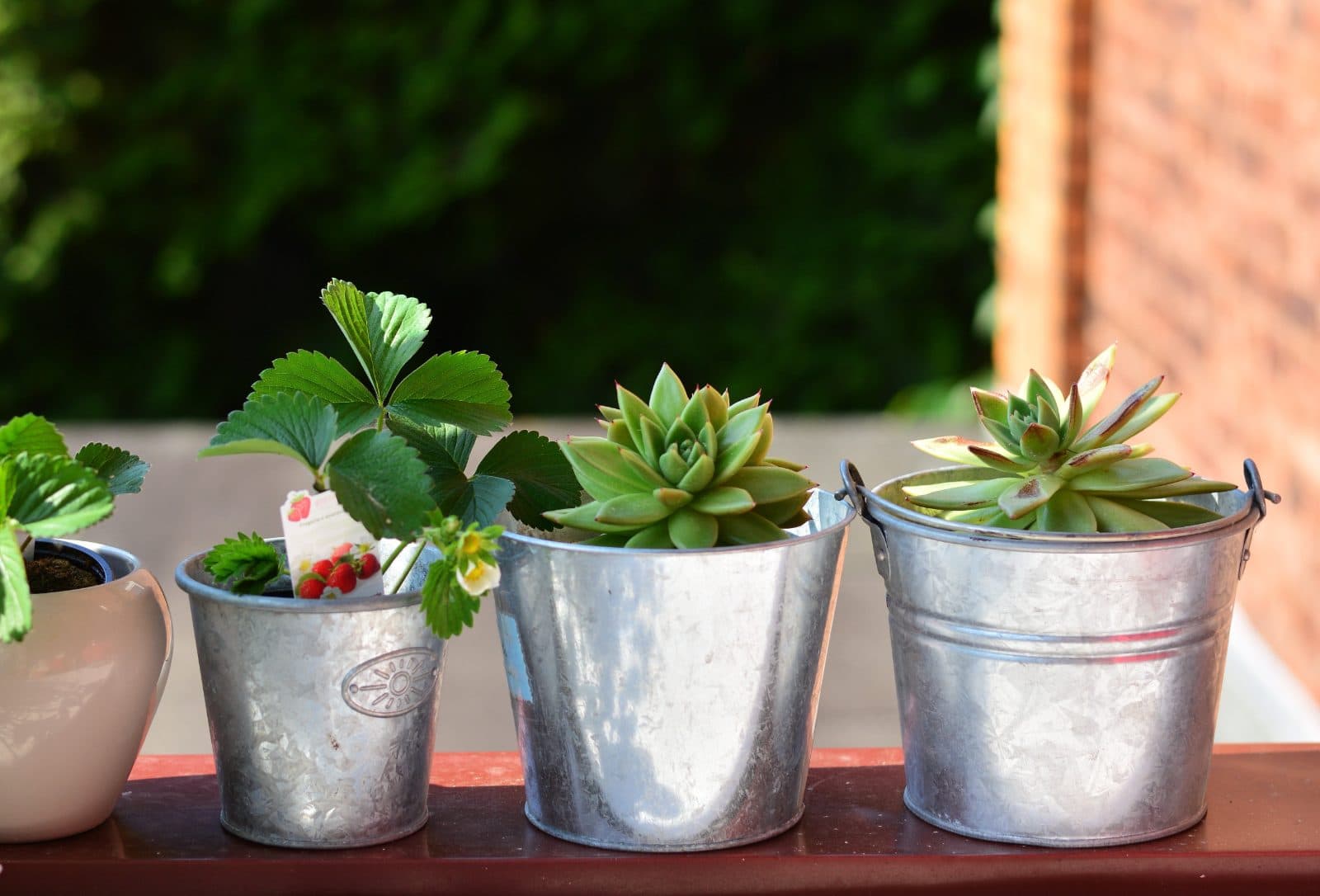
- Concrete, resin, metal: consider the weight (especially on balconies with a limited load capacity) and how much metal overheats in the sun.
A few practical tips for the balcony:
- Consider the weight of a full, wet pot: moist soil weighs a lot, so check your balcony's load capacity.
- Dark containers facing south overheat: the roots suffer from excessive heat.
- A light colour and a position that avoids full sun on the ground all day help a great deal in summer.
Once you've decided on pots and soil, recording each vegetable on Greenkeep along with its container lets you receive watering and feeding reminders tuned to the real volume of soil, which is the real reason the initial choice matters so much.
Let AI tell you exactly what to do
Join the waitlist: species ID, diagnosis and the Gemma assistant, with the lifetime founder discount.
Keep reading
Frequently asked questions
Aim for at least 30 cm of depth, ideally 40, with a volume of 25 to 40 litres per plant. Tall indeterminate varieties call for the higher figures, while balcony cherry tomatoes get by with less. Burying the seedling a little deeper, covering part of the stem, encourages new roots and a more stable plant.
It's best avoided: in a container it compacts, drains poorly, and can bring in weed seeds and pathogens. Use a specific vegetable potting soil or a good all-purpose mix, enriched with mature compost and lightened with perlite or coconut fibre if it turns out too heavy.
They're excellent for thirsty vegetables like tomatoes, courgettes and cucumbers, and useful if you water irregularly. They're less suited to Mediterranean herbs (rosemary, thyme, sage), which prefer drier soil. They should still have an overflow to let excess water out after rain.
It's a debated point: it isn't essential and doesn't replace a good potting soil. In large pots or with heavy substrates a layer of expanded clay can help, in small pots it adds little. What really matters are clear drainage holes and a mix that drains well.
Cut-and-come-again salads, rocket, radishes and small herbs like parsley, thyme and oregano do well in 5-10 litres with about 15-20 cm of depth. Basil and cut-and-come-again chard prefer 10-15 litres. Here too, a slightly larger container is better so you don't find the soil dry halfway through a summer day.
Sources
- ASPCA – Toxic and Non-Toxic Plants
- Missouri Botanical Garden – Plant Finder
- NC State Extension – Plant Toolbox
- Plants of the World Online (POWO, Kew)
- Royal Horticultural Society (RHS)
- UC IPM (UC ANR)
- UF/IFAS Gardening Solutions
- University of Maryland Extension – Grow It Eat It
- University of Minnesota Extension – Yard & Garden
Related guides
 For beginners
Balcony Garden for Beginners: Where to Start
A practical guide to starting a container garden on your balcony: what to grow with no fuss, how much sun you need, and the mistakes to avoid in your first year.
Read the guide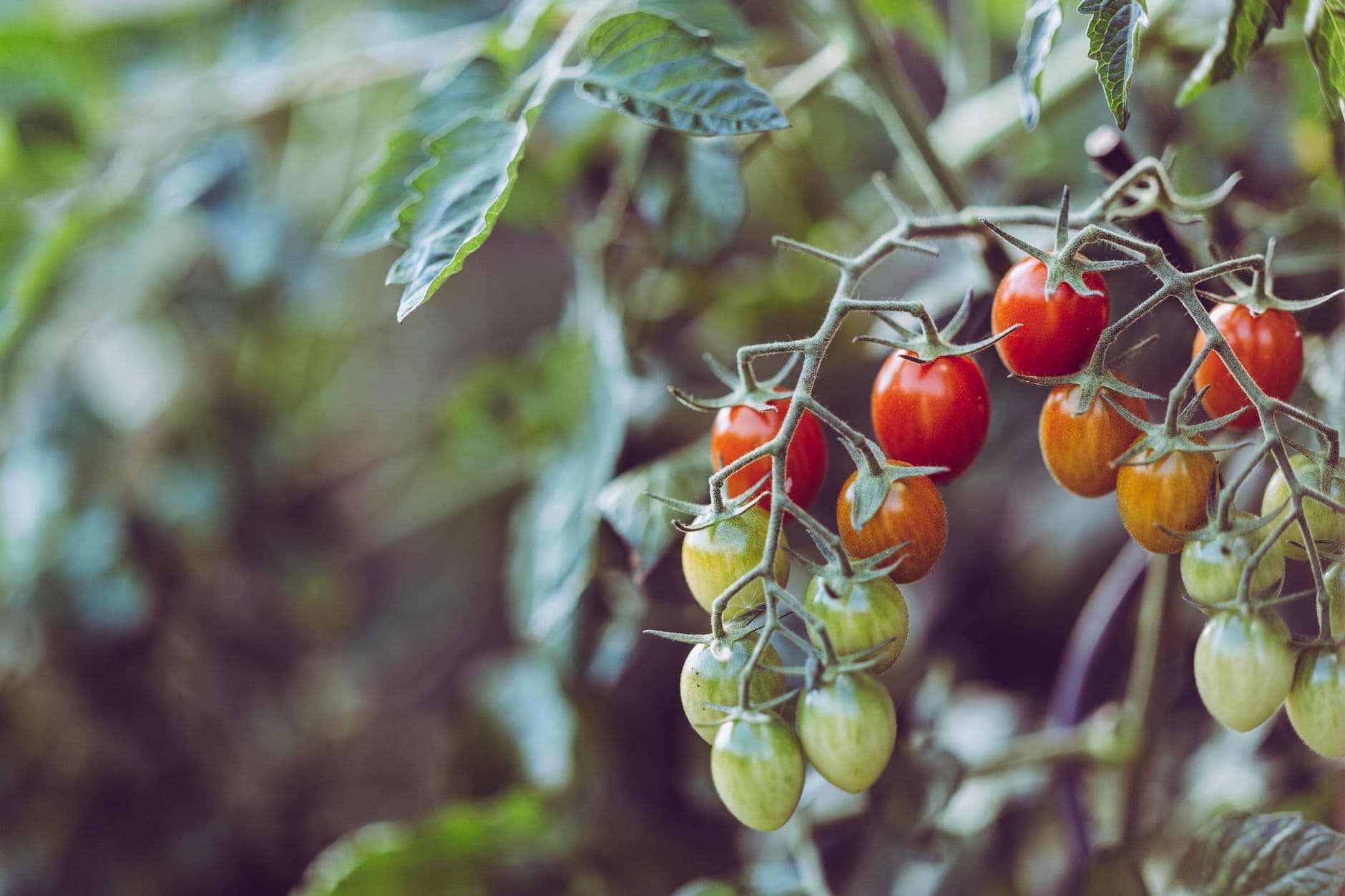 Care
CareGrowing Tomatoes in Pots on the Balcony
How to grow tomatoes in pots on the balcony: the right pot, sun, watering, fertiliser and sowing time explained step by step.
Read the guide Seasonal
Winter Balcony Garden: What to Grow in the Cold
Even in winter your balcony can produce a harvest: spinach, lamb's lettuce, small cabbages and hardy herbs. Here's what to sow in pots and how to protect it from frost.
Read the guide