
Wild Meadow Flowers: The Most Common Ones to Recognise
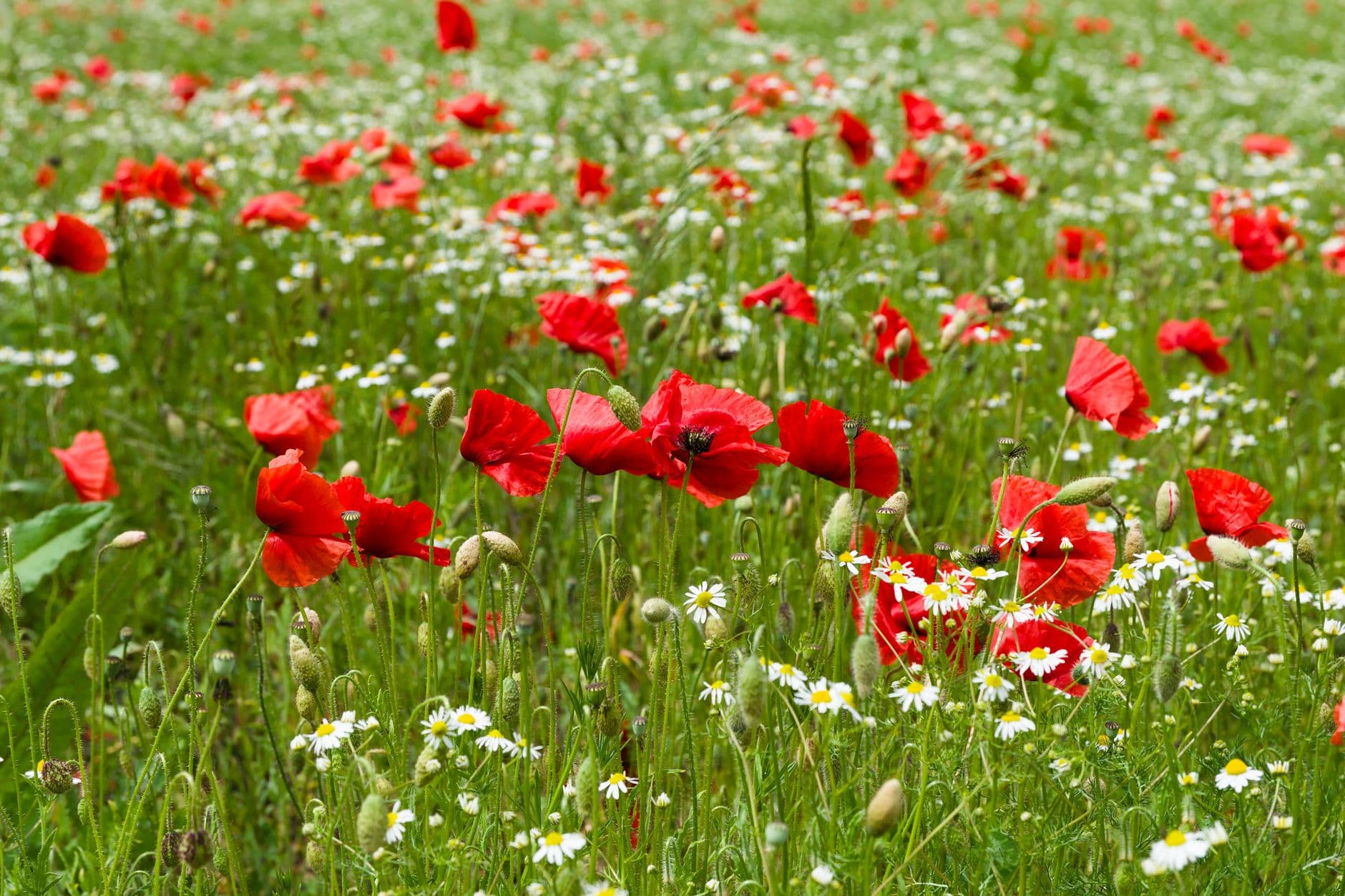
Photo by Jean-Paul Wettstein
A single walk through a country meadow in spring is enough to bring you face to face with dozens of different flowers. Many have names we vaguely know but struggle to match to the right plant. Here you will find the most widespread wild meadow flowers in temperate Europe, with the details you really need to recognise them: colour, shape, leaves and flowering time. One piece of advice before you begin: looking is always fine, touching or picking is not. Some common species are irritating or poisonous, and we cover them all in the final part.
If you are unsure in front of a flower, you can photograph it with Greenkeep: the species identification instantly suggests the most likely match, so you learn to recognise it by eye the next time.
How to Recognise a Meadow Flower: What to Look At
Before the names, you need the habits of a good observer. Recognising a wild flower becomes much easier if you always look at the same four elements.
- Colour and number of petals: yellow, white, pink, blue; distinct petals (as in the buttercup) or many little flowers gathered into a single flowerhead (as in the daisy and the dandelion).
- Shape of the flower: cup-shaped, star-shaped, spike-like, or an umbrella of many small flowers.
- The leaves: shape (entire, toothed, divided), arrangement, whether they form a rosette at the base or grow along the stem.
- Habit and habitat: a low, creeping plant or a tall, branching one, a dry or damp meadow, a roadside or a pasture.
A frequent mistake is confusing plants with similar yellow flowerheads: dandelion, cat's-ear and several other composites look very much alike. In these cases the details matter, such as the basal leaves or the hollow stem. Photographing the flower, the leaf and the habit with Greenkeep helps precisely because the visual comparison takes several features into account at once, not just the colour.
Wild Spring Flowers: The First to Appear
With the first mild days meadows fill with species that make the most of the light before the grass grows tall.
Dandelion (Taraxacum officinale)
The classic "lion's tooth", with an intense yellow flowerhead and the well-known sphere of feathery seeds (the "blowball"). Leaves in a basal rosette, strongly toothed. The stem is hollow and leafless. It is one of the most widespread flowers of all in European meadows.
Daisy (Bellis perennis)
Tiny, with a white flowerhead tinged pink underneath and a yellow centre. It grows almost everywhere in regularly mown meadows. It flowers for a long time, often as early as late winter.
Primrose (Primula vulgaris)
Pale yellow flowers with five lobes, gathered in clumps near the ground, with wrinkled leaves arranged in a rosette. It loves woodland edges and semi-shaded meadows.
Violet (Viola odorata and related species)
Small purple flowers (sometimes white) with irregular petals and heart-shaped leaves. It grows in cool meadows and along hedgerows.
Speedwell (Veronica spp.)
Tiny streaked blue flowers, very common in sparse meadows and along path edges. They almost go unnoticed but colour whole stretches of grass.
Want a care plan tailored to your plants?
Join the waitlist: species ID, diagnosis and the Gemma assistant, with the lifetime founder discount.
Yellow Meadow Flowers: How to Tell Them Apart
Yellow is the most frequent colour in meadows and also the most confusing. Here is how to separate the most common species.
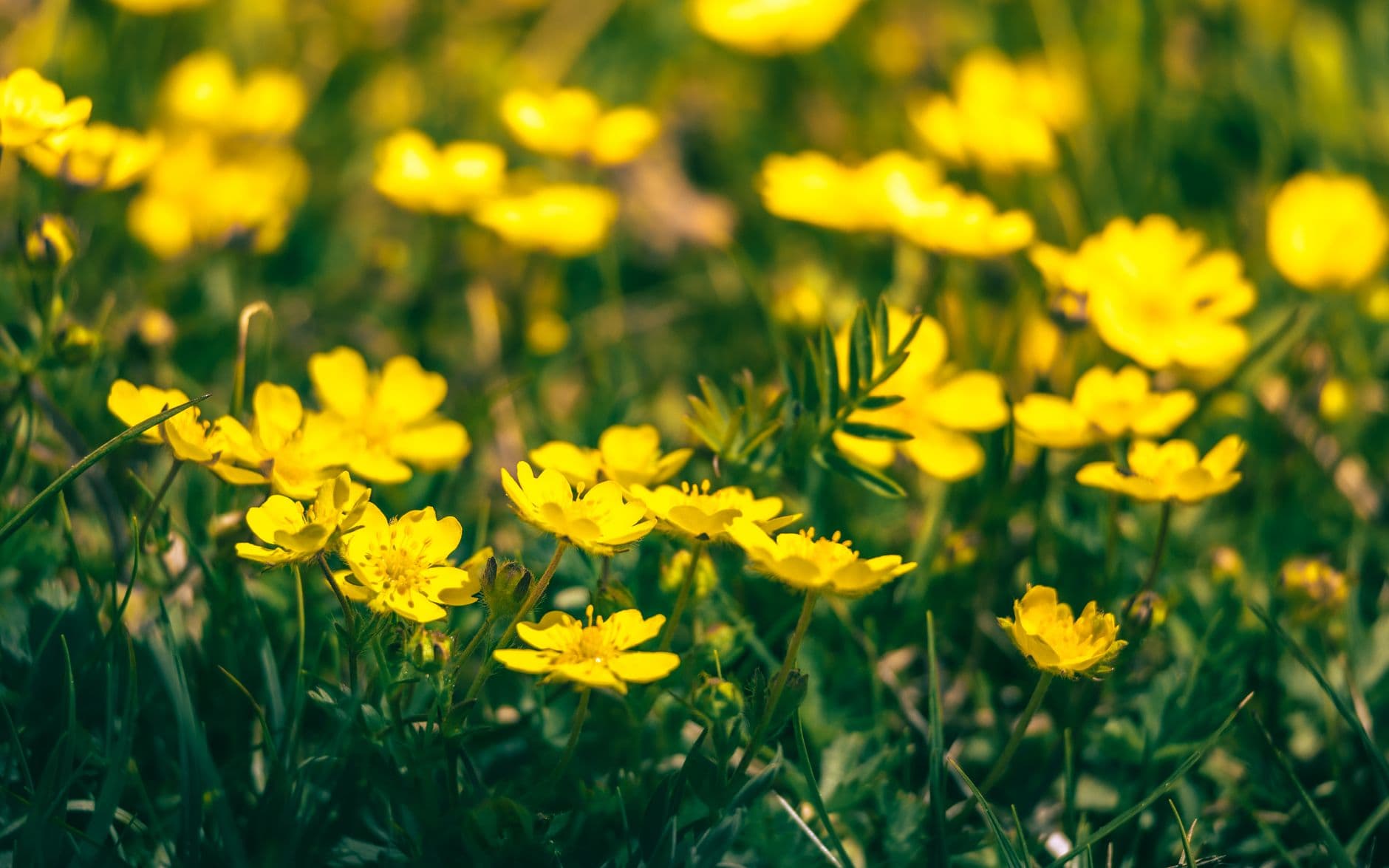
Buttercup (Ranunculus acris and relatives)
Glossy, almost lacquered petals in a bright yellow, five in number. Deeply divided leaves. It is extremely widespread in damp meadows. Careful: the sap irritates the skin and the plant is toxic if eaten, so it is one to observe only.
Dandelion and lookalikes
As we have seen, the dandelion has a flowerhead full of many slender petals. Several other yellow composites resemble it (for example cat's-ear, Hypochaeris, or some Sonchus): telling them apart precisely takes a trained eye, and here identification by photo helps a great deal.
Marsh marigold (Caltha palustris)
Intense, glossy yellow, it grows in wet meadows, along ditches and near water. Heart-shaped or kidney-shaped leaves. Like the buttercups it contains protoanemonin: the sap irritates the skin and eating it causes gastrointestinal upset that can be serious. One to observe, not to touch or pick.
Bird's-foot trefoil and yellow clovers (Lotus, Trifolium)
Small yellow flowers with the typical shape of legumes (pea-like), often gathered in little clusters. Very common in dry, sunny meadows.
The practical rule: check whether the yellow "flower" is a single flowerhead made of many little flowers (composites) or a single flower with clearly distinct petals (buttercup, marsh marigold). It is the first fork in the road that keeps you from going wrong.
White, Pink and Blue: The Meadow's Other Stars
Besides yellow, European meadows offer a range of colours that helps a great deal with recognition.
Clover (Trifolium pratense, T. repens)
Red clover has rounded pink-purple flowerheads, white clover paler, lower ones. Leaves with three leaflets bearing the classic pale mark. They are among the flowers most loved by pollinators.
Yarrow or milfoil (Achillea millefolium)
Flat-topped corymbs of small white flower heads (sometimes pinkish), on finely divided, almost feathery leaves. It grows in meadows and along path edges and stands up well to drought.
Poppy (Papaver rhoeas)
Four bright red petals with the look of tissue paper, on a slender, hairy stem. Typical of disturbed meadows, field margins and turned-over ground. It flowers from late spring into summer.
Cornflower (Centaurea cyanus)
Intense blue, with flowers of fringed outline. Once extremely common in cereal fields, today rarer but still present in flowery meadows and wild borders.
Bellflower (Campanula spp.)
Nodding bell-shaped flowers, blue-violet, on slender stems. Frequent in hill meadows and at woodland edges.
Meadow sage (Salvia pratensis)
Spikes of blue-violet, lipped flowers, typical of sunny, limestone meadows. The leaves are faintly scented, a characteristic of the species: there is no need to touch them to appreciate it.
Dangerous Wild Flowers Not to Touch
Recognising also serves to keep you away from what can hurt you. Some species found in meadows and at their edges should be observed without touching or picking them. The golden rule with children and animals: look, do not put in your mouth.
Giant hogweed (Heracleum mantegazzianum)
Enormous (3 to 5 metres), with large white umbels and sturdy stems spotted with red. It is precisely that out-of-scale size that separates it from common hogweed (Heracleum sphondylium), which stays under about 2 metres. The sap, on contact with the skin and in sunlight, causes serious burns and blisters (phytophotodermatitis). It must not be touched under any circumstances. It is present in many parts of Europe along ditches and damp meadows.
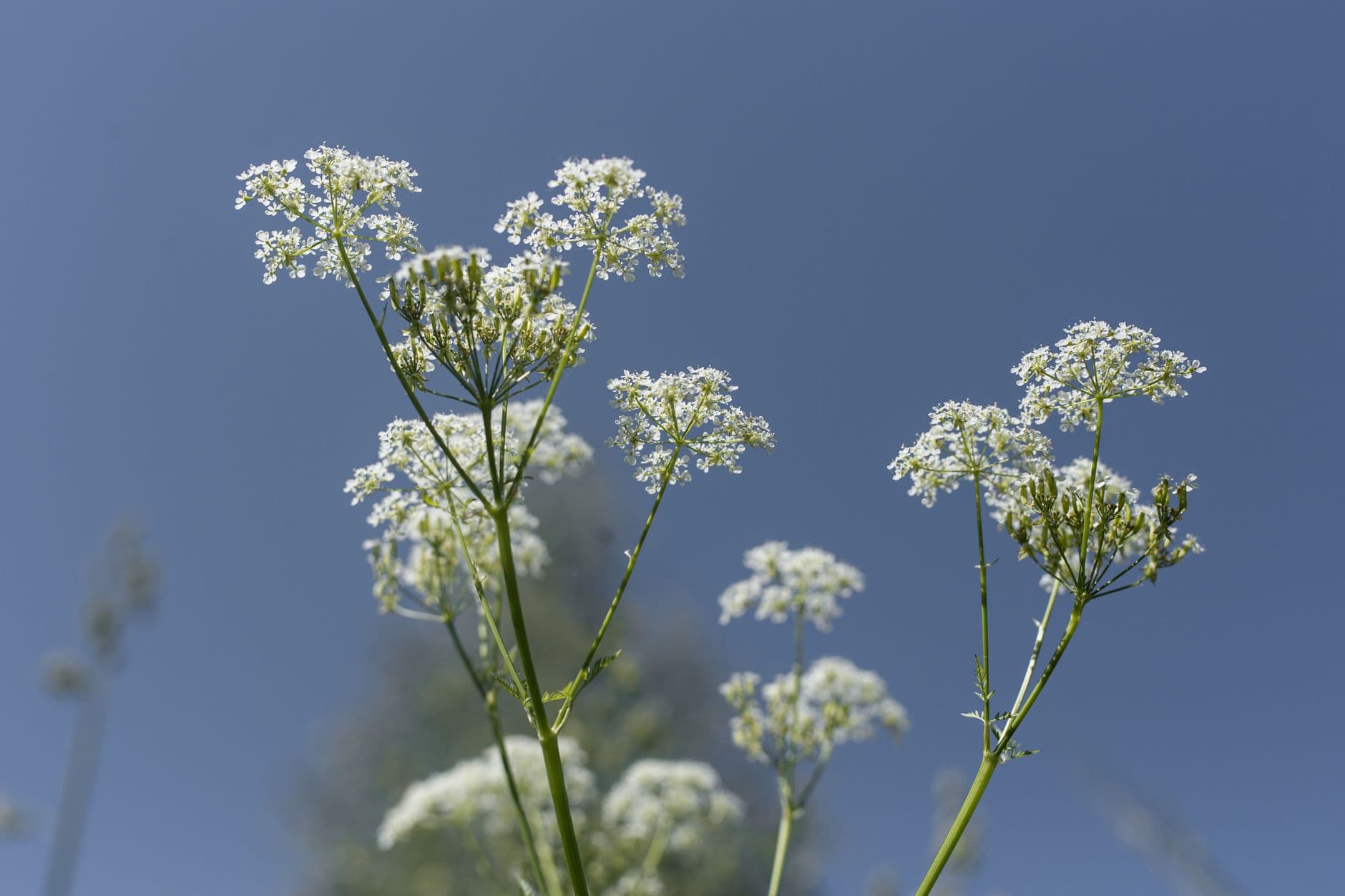
Poison hemlock (Conium maculatum) and umbellifer lookalikes
Umbels of small white flowers very similar to harmless plants. Some wild umbellifers are extremely poisonous if eaten. Since telling umbellifers apart is difficult even for experts, the prudent choice is never to pick them.
Buttercup and marsh marigold (Ranunculus, Caltha)
Already mentioned among the yellow flowers: the sap irritates the skin and they are toxic if eaten. Lovely to photograph, not to handle.
Autumn crocus (Colchicum autumnale)
Pink-lilac cup-shaped flowers that spring from the meadow in autumn, without leaves. The whole plant is very poisonous. It is not to be confused with saffron, but the mix-up that matters happens in spring, when its leaves are taken for those of wild garlic or ramsons (Allium ursinum): that swap is behind fatal poisonings.
With dogs and cats the same caution applies: many of these plants are toxic to them too, and the reliable reference is your vet or a poison control centre. If you suspect contact or ingestion, contact a poison control centre or the vet at once. To learn more about keeping your animals safe around plants, see the dedicated guides too.
Observe Without Disturbing: A Few Good Habits
A flowery meadow is an ecosystem, not a bouquet to compose. Bees, butterflies and other insects depend on these flowers, and many wild species are in decline precisely where meadows are mown too often.
- Do not gather by the handful: photograph rather than pull up. Some species are protected at local level.
- Stay on the paths where possible, so as not to trample rosettes and shoots.
- Never taste a wild flower or leaf out of curiosity: several common species are poisonous and the lookalikes fool even experts.
- Keep an eye on children and animals near giant hogweed, buttercups and unknown umbellifers.
With Greenkeep you can build yourself a little archive of the flowers you come across: a photo, the name, the place and the date. It is the simplest way to learn to recognise them season after season, and to notice which species return every year in your favourite meadow.
Let AI tell you exactly what to do
Join the waitlist: species ID, diagnosis and the Gemma assistant, with the lifetime founder discount.
Keep reading
Frequently asked questions
Look at the colour and shape of the flower, the number of petals, the leaves (entire or divided, in a rosette or on the stem) and the habitat in which it grows. With these elements you narrow the field a great deal. For a quick answer you can photograph the flower with Greenkeep: the visual identification instantly suggests the most likely species to compare with what you see.
The most frequent are the dandelion (a flowerhead of many little flowers, with a blowball), the buttercup (glossy, distinct petals), the marsh marigold of wet areas and the small yellow flowers of legumes like Lotus and yellow clovers. To tell them apart, check whether it is a single flowerhead or a single flower with separate petals.
Yes. Giant hogweed causes skin burns in sunlight and is the most treacherous. Buttercups and marsh marigolds irritate the skin. Several white-flowered wild umbellifers and the autumn crocus are very poisonous if eaten. The rule is to observe without touching or picking, and never taste anything.
The first (daisy, primrose, violet, dandelion, speedwell) appear as early as late winter and early spring. Poppy, cornflower, clovers and meadow sage arrive later, between late spring and summer. The timing varies with altitude and climate: in the mountains and on the Alps flowering is later.
Better not. Many flowers are essential for bees and butterflies, some species are protected at local level and several common plants are toxic or irritating. Photographing them is the best way to enjoy them and learn to recognise them without damaging the meadow.
Sources
Related guides
 Identification
How to Identify the Most Common Trees in European Woodlands
A practical guide to identifying oaks, beeches, chestnuts and conifers by observing leaves, bark, fruits and overall shape during a walk in the woods.
Read the guide Identification
Poisonous Wild Plants You Should Learn to Recognise
A guide to recognising the most dangerous wild plants in Italian woods and meadows, so you can safely avoid them on your walks.
Read the guide Identification
Woodland Ferns and Mosses: How to Tell Them Apart
How to tell apart the ferns and mosses of the Italian woodland floor: features, common species and biological differences, with the help of Greenkeep's photo recognition.
Read the guide