
How to Identify the Most Common Trees in European Woodlands
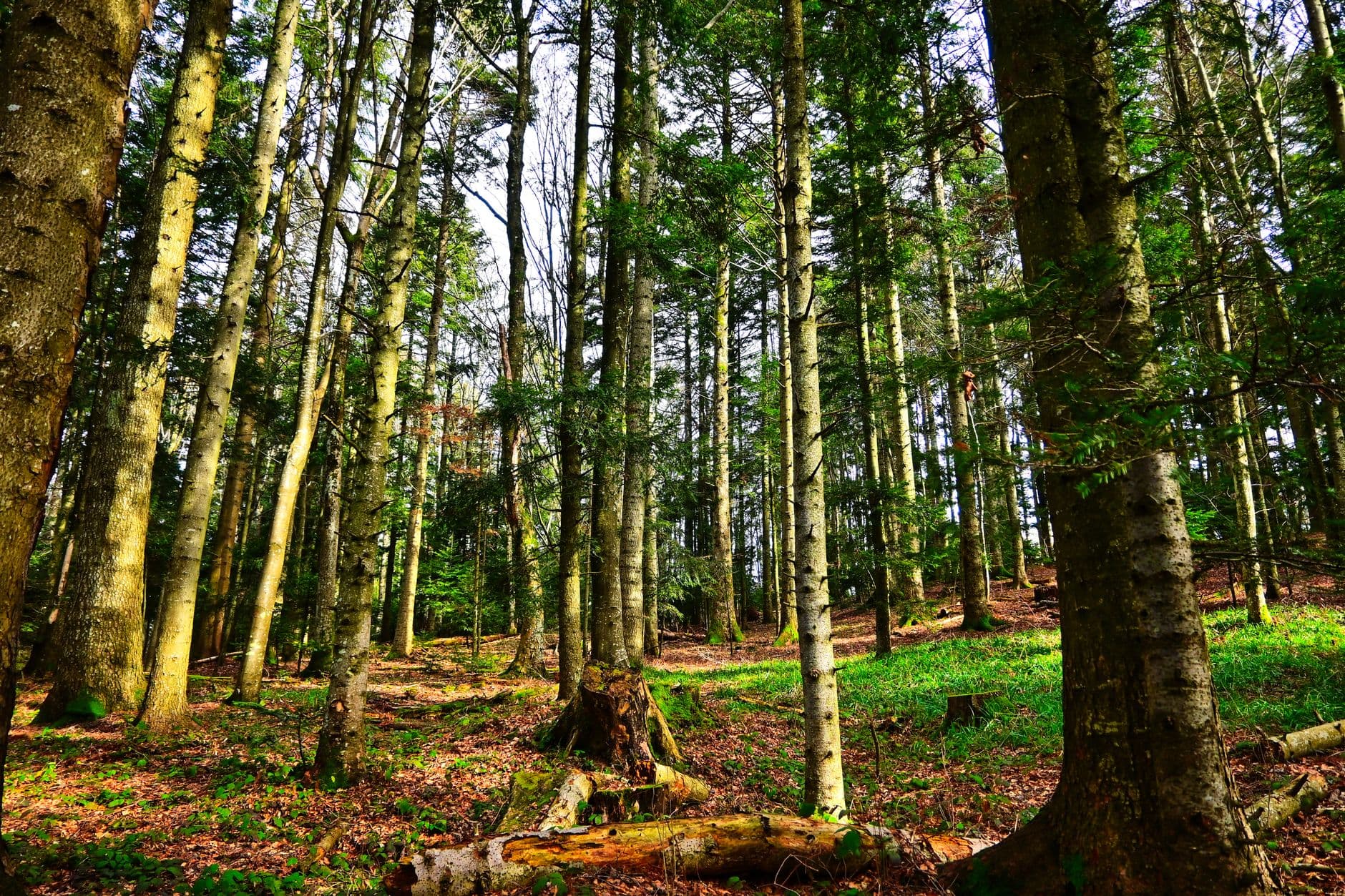
Photo by ᛟᛞᚨᛚᚹ ᚨᚱᚲᛟᚾᛊᚲᛁ
Walking in a wood changes completely once you start putting names to the trees around you. That broad crown becomes an oak, the smooth grey trunk a beech, the spiny husk on the ground gives away a chestnut. Identifying trees doesn't require a degree in botany: all you need are a few observation points (leaf, bark, fruit and overall shape) and a little practice.
In this guide we focus on the species you meet most often in European woodlands, from the broadleaf trees of the hills to the conifers of the mountains. The aim is to learn to tell them apart so you can appreciate them and, where it matters, recognise what's best left untouched. You won't find any instructions for gathering or eating anything: observing and naming is already an excellent reason to do it well.
Where to start: the four clues that really matter
Before diving into individual species, keep in mind that almost every tree can be identified by cross-referencing four observations. None is enough on its own, but together they narrow the field quickly.
- The leaf: look at the shape (lobed, oval, needle-like), the margin (smooth, serrated, toothed) and how the leaves are arranged on the twig (alternate or opposite). Remember that in winter many broadleaf trees are bare, so learn the other clues too.
- The bark: smooth or fissured, light or dark, in plates or in strips. It's an extremely useful feature precisely when the leaves are gone.
- The fruit or seed: acorn, beechnut, chestnut husk, cone, winged samara. It often stays on the ground and tells you a great deal.
- The habit: the overall shape of the crown, the trunk straight or branching low down, the environment where it grows (damp valley bottom, sunny slope, mountain altitude).
A fifth element helps a lot: where you are. A lowland wood, a mountain beech forest and an Alpine larch stand host different species, and altitude alone already rules out many possibilities.
The great broadleaf trees: oak, beech and chestnut
These are the three protagonists of the woods across much of Italy, from the hills to the low mountains.
Oak (genus Quercus)
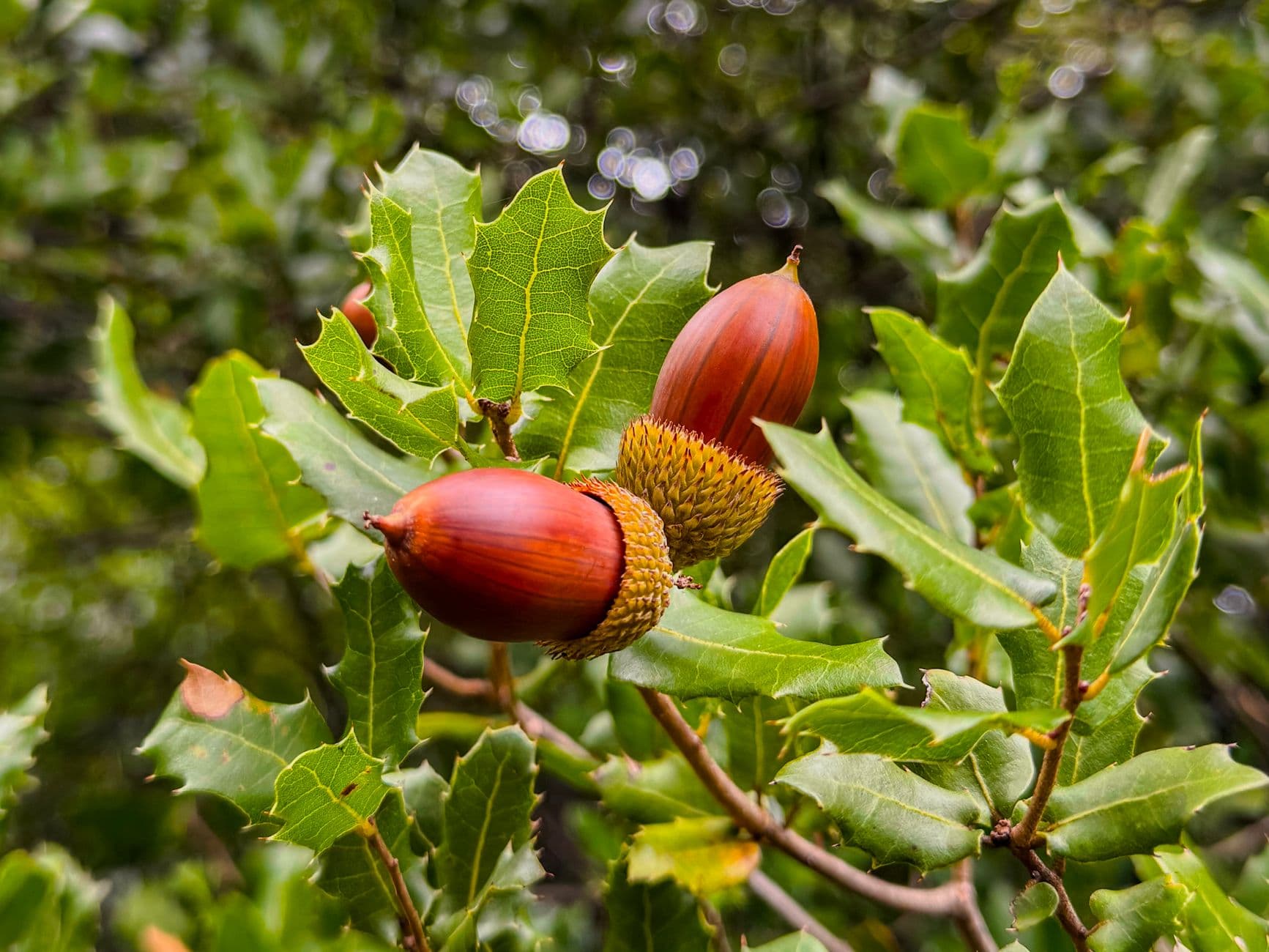
The name "oak" hides several species (downy oak, pedunculate oak, sessile oak, Turkey oak, holm oak...), but the common trait is the acorn, the oval fruit with its cup-shaped cupule. Deciduous oaks typically have lobed leaves, with more or less deep indentations along the margins. The bark is usually greyish-brown and deeply fissured in mature specimens. The holm oak (Quercus ilex) is an exception: it's evergreen, with leathery, small and often spiny leaves on the lower branches, typical of the Mediterranean scrub.
Beech (Fagus sylvatica)
Beech forms shady, cool woods, often in the mountains. Recognise it by its smooth, silvery-grey bark, which stays smooth far longer than that of other broadleaves and roughens only at the base in very old specimens, and by its oval leaves with a slightly wavy margin and small hairs along the edge of the young leaves. The fruit is the beechnut, a small triangular seed enclosed in a woody husk with soft spines. In a beech forest the undergrowth is often sparse, because the dense canopy lets little light through.
Chestnut (Castanea sativa)
The long, lance-shaped leaves with a clearly serrated margin of pointed teeth are the clearest sign. When young the bark is smooth, then it fissures into grooves that in old trees tend to arrange themselves in a spiral. The fruit is unmistakable: the very spiny green husk that contains the chestnuts. It grows well on acidic soils, often in chestnut groves that people have cultivated for centuries.
Want a care plan tailored to your plants?
Join the waitlist: species ID, diagnosis and the Gemma assistant, with the lifetime founder discount.
How to read leaves without getting confused
Leaves are the most immediate clue in spring and summer. With a little method you'll avoid the most common mix-ups.
Simple or compound?
A simple leaf has a single blade (oak, beech, chestnut). A compound leaf is divided into many leaflets attached to a common axis, as in ash or black locust. To work out whether a segment is a whole leaf or a leaflet, look for the bud: it sits at the base of the true leaf, not of the individual leaflets.
The margin
- Entire and wavy: beech.
- Serrated with dense, pointed teeth: chestnut.
- Lobed with rounded sinuses: many deciduous oaks.
- Irregularly toothed: hazel, with rounded leaves that feel rough to the touch.
The arrangement on the twig
A detail that is often decisive: leaves opposite (in pairs, one facing the other) or alternate (one per node, staggered). Maples and ashes are opposite; oaks, beeches and chestnuts are alternate. Checking this feature first rules out entire families of trees in one go.
When you're not sure, a close-up photo helps pin down the details. With Greenkeep you can photograph a leaf or the bark and get a species identification: the recognition also covers many wild plants, so it's a good starting point to then check against the other clues on the spot.
Bark: the clue that stays even in winter
When the trees are bare, the bark takes centre stage. With practice, some species can be recognised from afar by the trunk alone.
- Smooth and silvery-grey: beech, which stays smooth far longer than other broadleaves and roughens only at the base in very old specimens.
- White, peeling in horizontal strips: birch, typical of poor soils and mountain or cool environments.
- Grey with smooth, almost 'muscular' ribs: hornbeam, whose trunk looks sculpted.
- Deeply fissured in vertical grooves: many oaks and, in old age, chestnut (with often spiralled grooves).
- In plates that flake off leaving light patches: plane tree, common along watercourses and avenues, less so in the wood proper.
- Reddish and scaly at the top, thick and dark at the bottom: Scots pine, a very useful feature for telling it apart from other conifers.
Always observe a mature specimen and look at mid-trunk: the bark of young branches can be very different and lead you astray.
Pine or fir? Telling conifers apart
In the mountains conifers dominate, and the most frequent question is precisely how to tell a pine from a fir. The key lies in the needles and the cones.
How the needles are attached
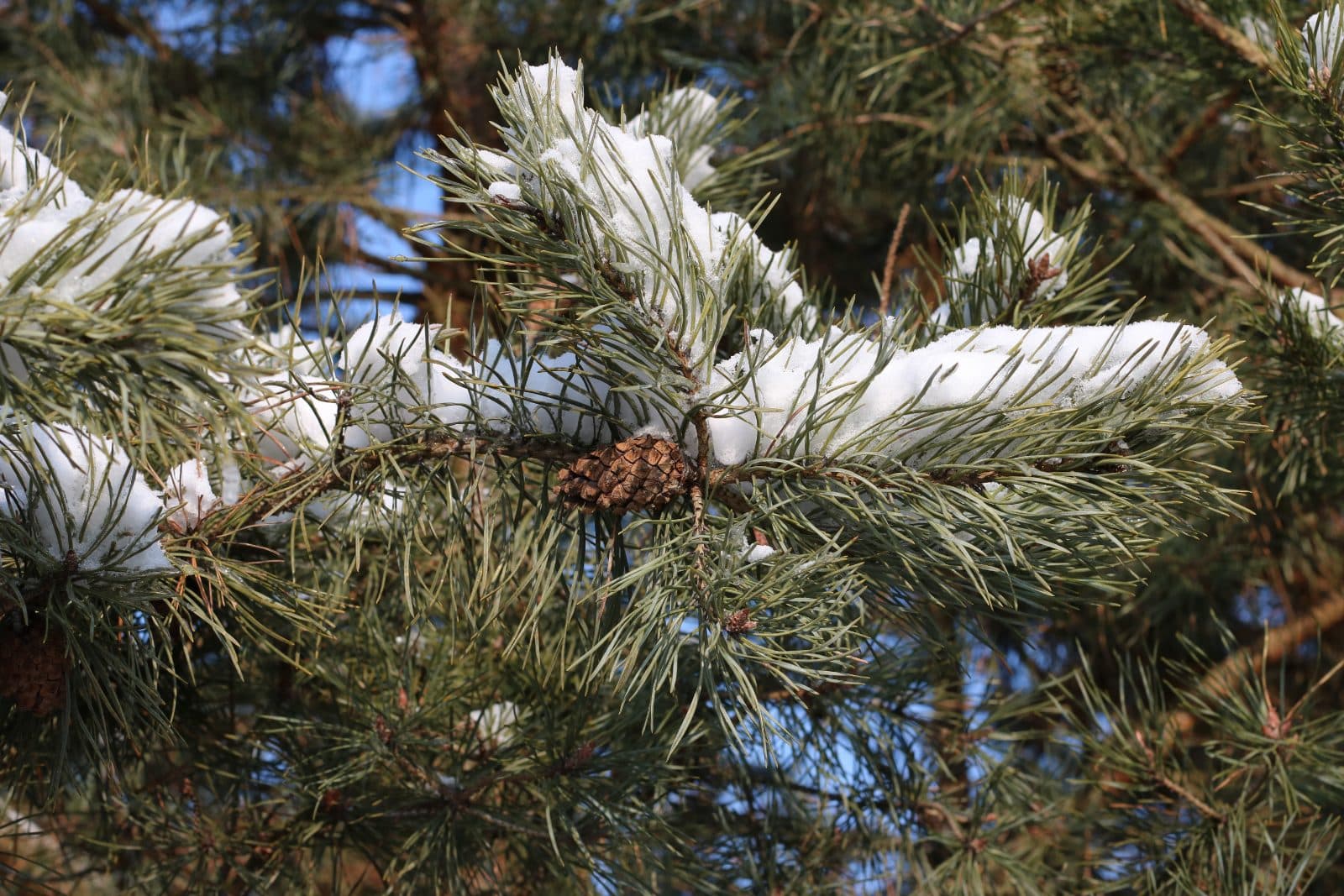
- Pines (genus Pinus): the needles are long and gathered in bundles of two, three or five, held together at the base. Scots pine has two, short and slightly twisted; the stone pine (the umbrella-shaped one) has two longer ones.
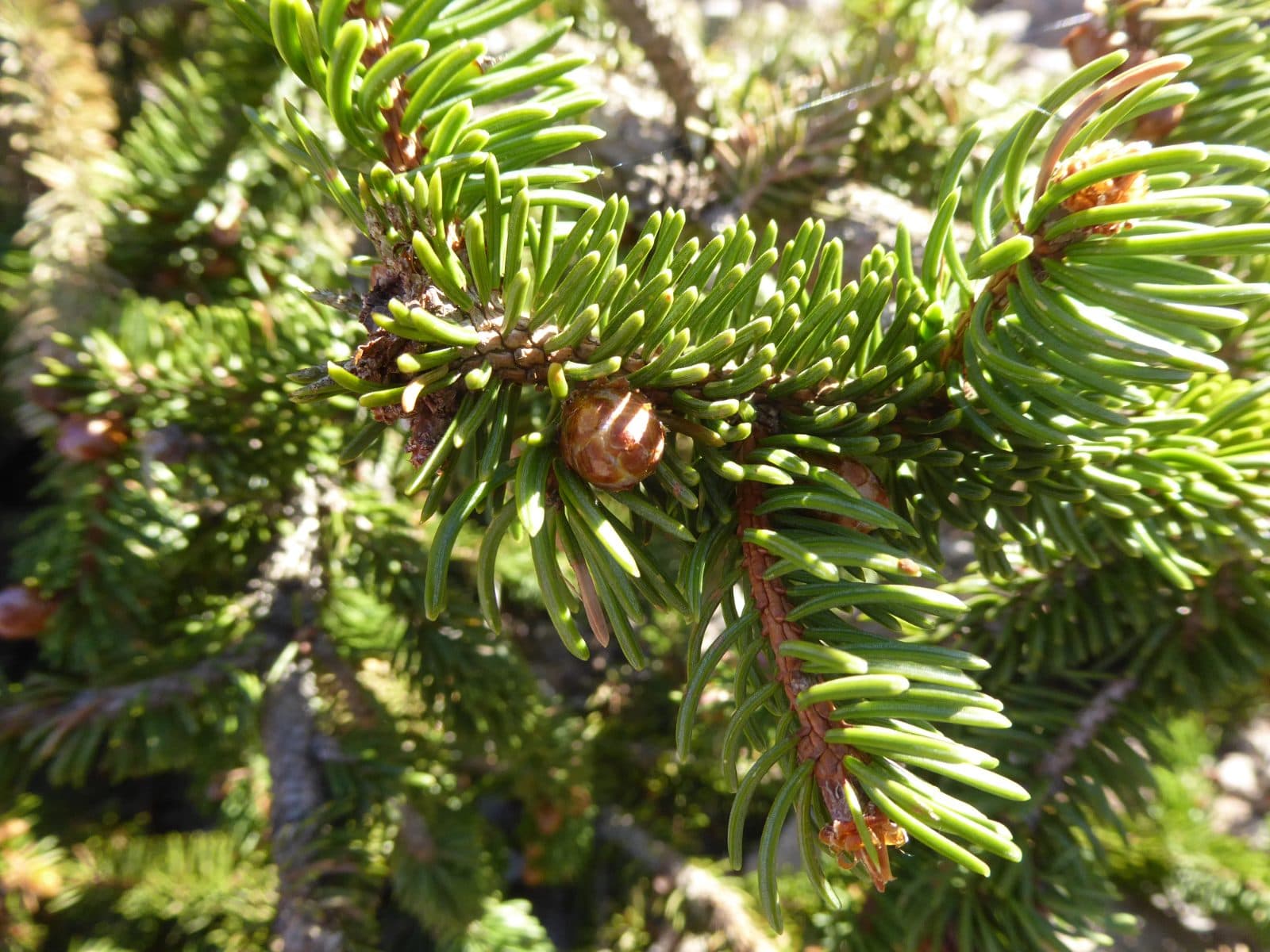
- Firs: the needles are single, inserted one by one on the twig. In the Norway spruce (Picea abies) the needles are sharp, almost square in cross-section, and stay attached to a small peg that makes the bare twig rough. In the silver fir (Abies alba) the needles are flat, soft, with two light stripes on the underside, and leave a smooth, round scar when they fall.
The cones (the surest way)
- Norway spruce: hanging cones, which fall to the ground whole.
- Silver fir: upright cones on the branches, which break up into scales while on the tree, so you'll rarely find whole ones on the ground.
- Larch (Larix decidua): it's the only native conifer that loses all its needles in winter, becoming bare; in summer it has tufts of soft needles and small upright cones. In autumn it turns golden-yellow, a spectacular sight in the Alps.
If you find needles in bundles, think "pine"; if they're single, think "fir", and always confirm with the cone whenever you can see one.
Safety: what to observe without touching
Identifying also helps you steer clear of what's dangerous. In the woods you may come across toxic species that are worth recognising and not handling, especially if you're with children or animals.
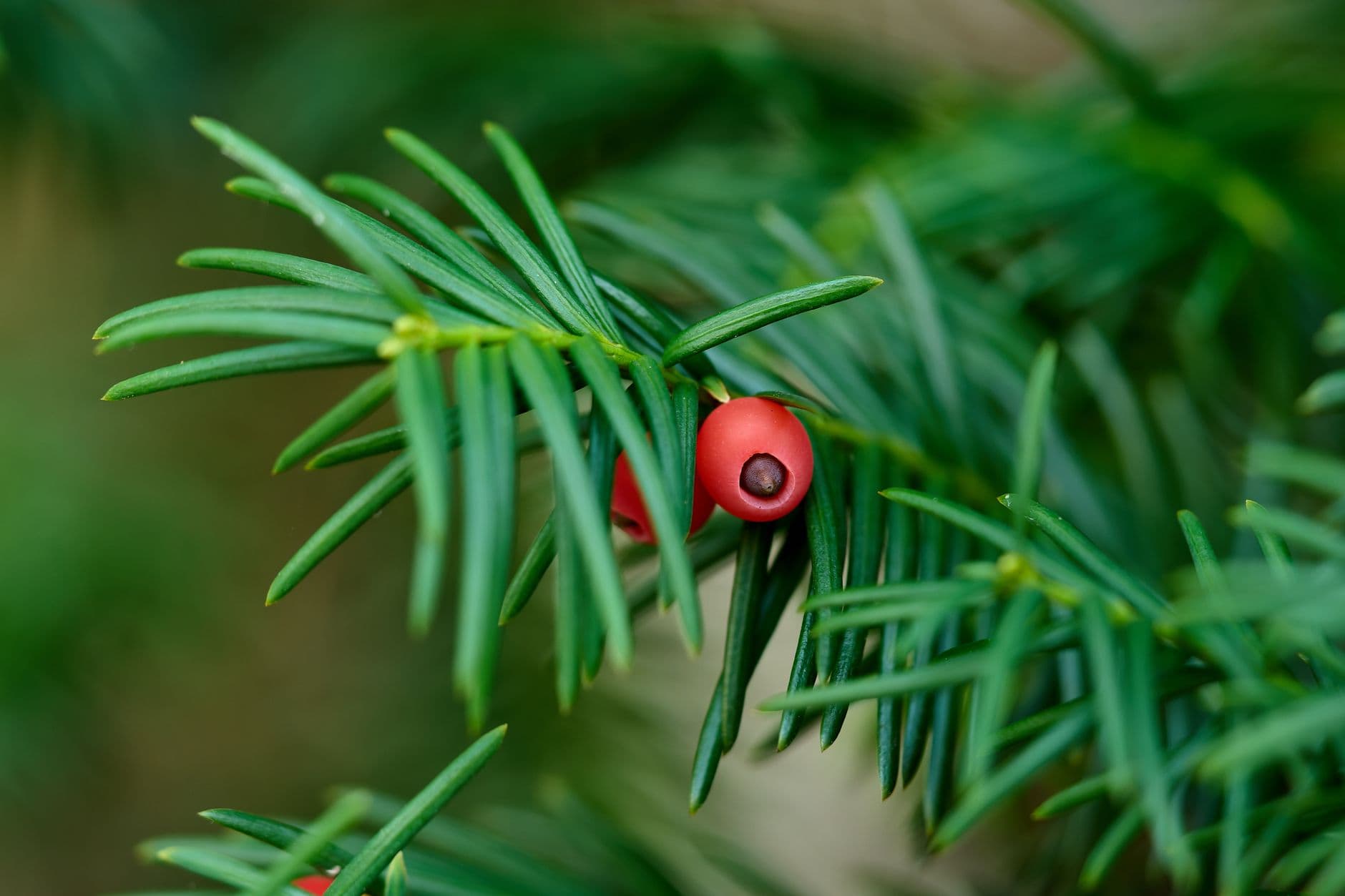
The yew (Taxus baccata) is a conifer with flat, soft, dark green needles, and it produces small fleshy red fruits (arils). Almost the entire plant contains highly toxic compounds: the ASPCA classifies the yew as toxic to dogs, cats and horses; in people, the taxines in the needles, bark and seeds are cardiotoxic and potentially lethal. Admire it, but don't touch it and keep animals away.
Many understorey shrubs also call for caution. In general, the rule is simple: in the woods you observe and photograph, you don't gather and you don't taste anything. This guide is meant to put a name to the trees and let you enjoy them, not to suggest culinary uses. If a pet should swallow parts of a plant you don't recognise, contact your vet or a poison control centre straight away.
To learn without risk, photograph leaves, bark and fruits: an app like Greenkeep gives you a first guess at the species that you then confirm with the features seen in the field. If something doesn't add up, it's better to stay in doubt than to take the identification for granted.
Let AI tell you exactly what to do
Join the waitlist: species ID, diagnosis and the Gemma assistant, with the lifetime founder discount.
Frequently asked questions
The deciduous oak has lobed leaves, with rounded indentations along the margins, whereas the chestnut has long, lance-shaped leaves with a clearly serrated margin of pointed teeth. On the ground the doubt clears up at once: the oak leaves acorns with a cup-shaped cupule, the chestnut very spiny green husks.
Look at how the needles are inserted. In pines they're gathered in bundles of two, three or five; in firs they're single, one by one on the twig. Confirm with the cone: hanging and whole on the ground in the Norway spruce, upright and breaking up on the tree in the silver fir.
Yes, using bark, habit and fallen fruits. Beech has smooth silvery-grey bark, birch white bark that peels, hornbeam an almost 'muscular' smooth trunk, many oaks deep vertical grooves. Acorns, beechnuts and husks on the ground complete the picture.
It can give a good first guess. By photographing a leaf or the bark with Greenkeep you get a species identification that also recognises many wild plants. It's an excellent starting point, always to be checked against the other clues (fruit, habit, environment) directly on the spot.
The yew (Taxus baccata) is among the most treacherous: flat dark green needles and small red fruits, with almost the entire plant toxic: the ASPCA classifies it as toxic to dogs, cats and horses, and in people the taxines in the needles, bark and seeds are cardiotoxic and potentially lethal. In general, in the woods it's best to observe and photograph without gathering or tasting anything.
Sources
Related guides
 Identification
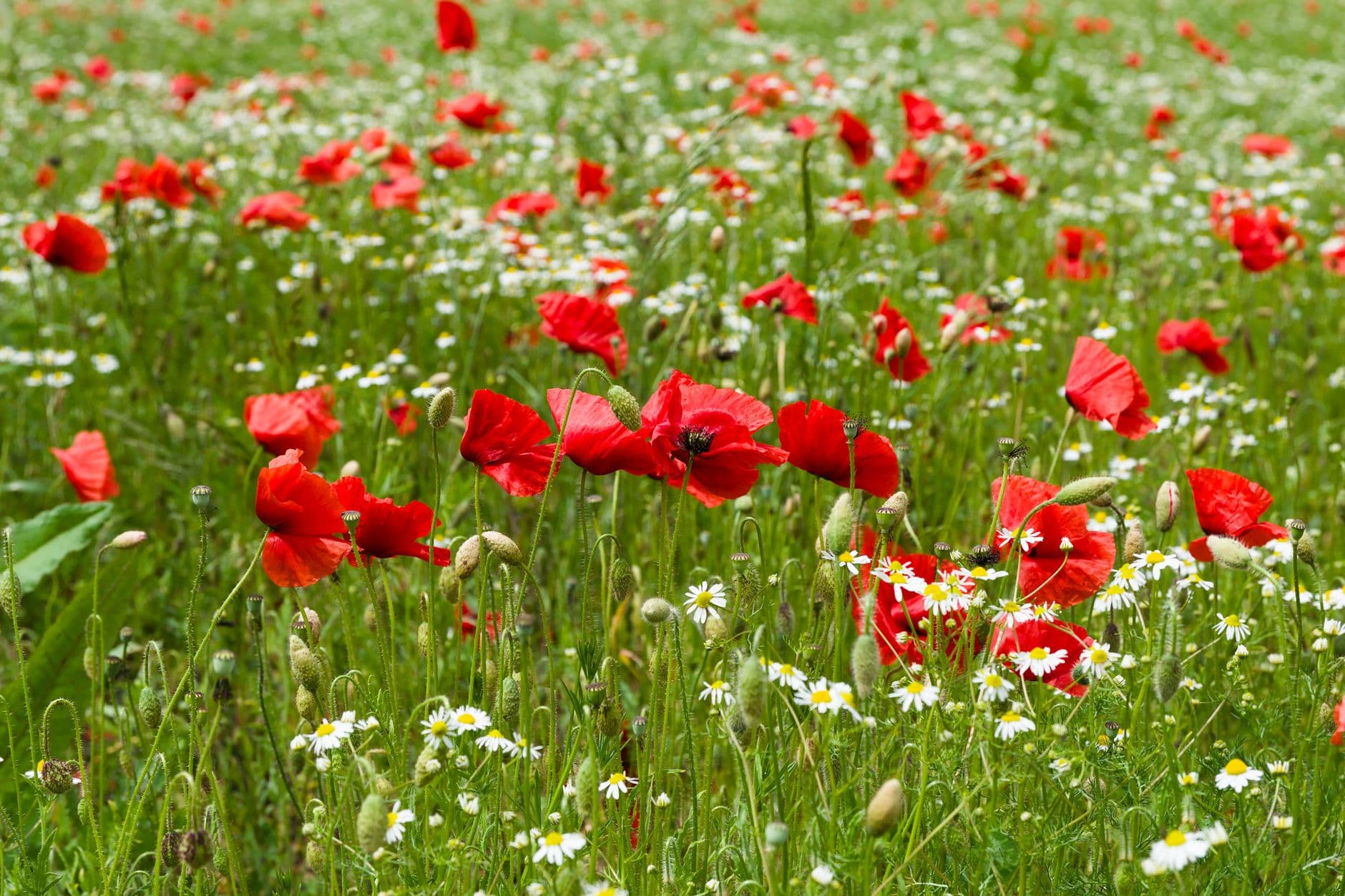
Wild Meadow Flowers: The Most Common Ones to Recognise
A practical guide to the most widespread wild meadow flowers in temperate Europe: how to recognise them, when they bloom and which ones to avoid touching.
Read the guide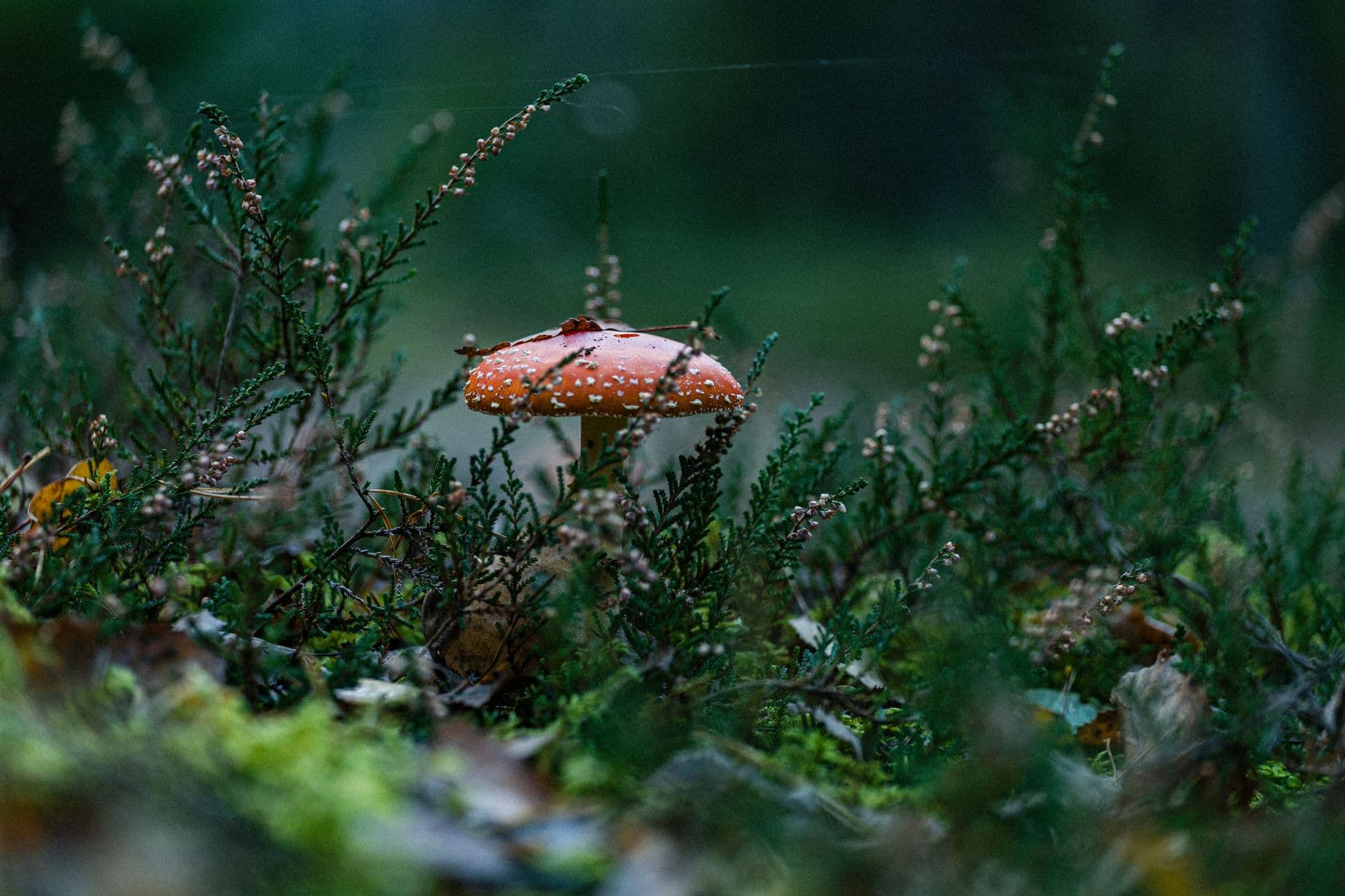 Identification
Poisonous Wild Plants You Should Learn to Recognise
A guide to recognising the most dangerous wild plants in Italian woods and meadows, so you can safely avoid them on your walks.
Read the guide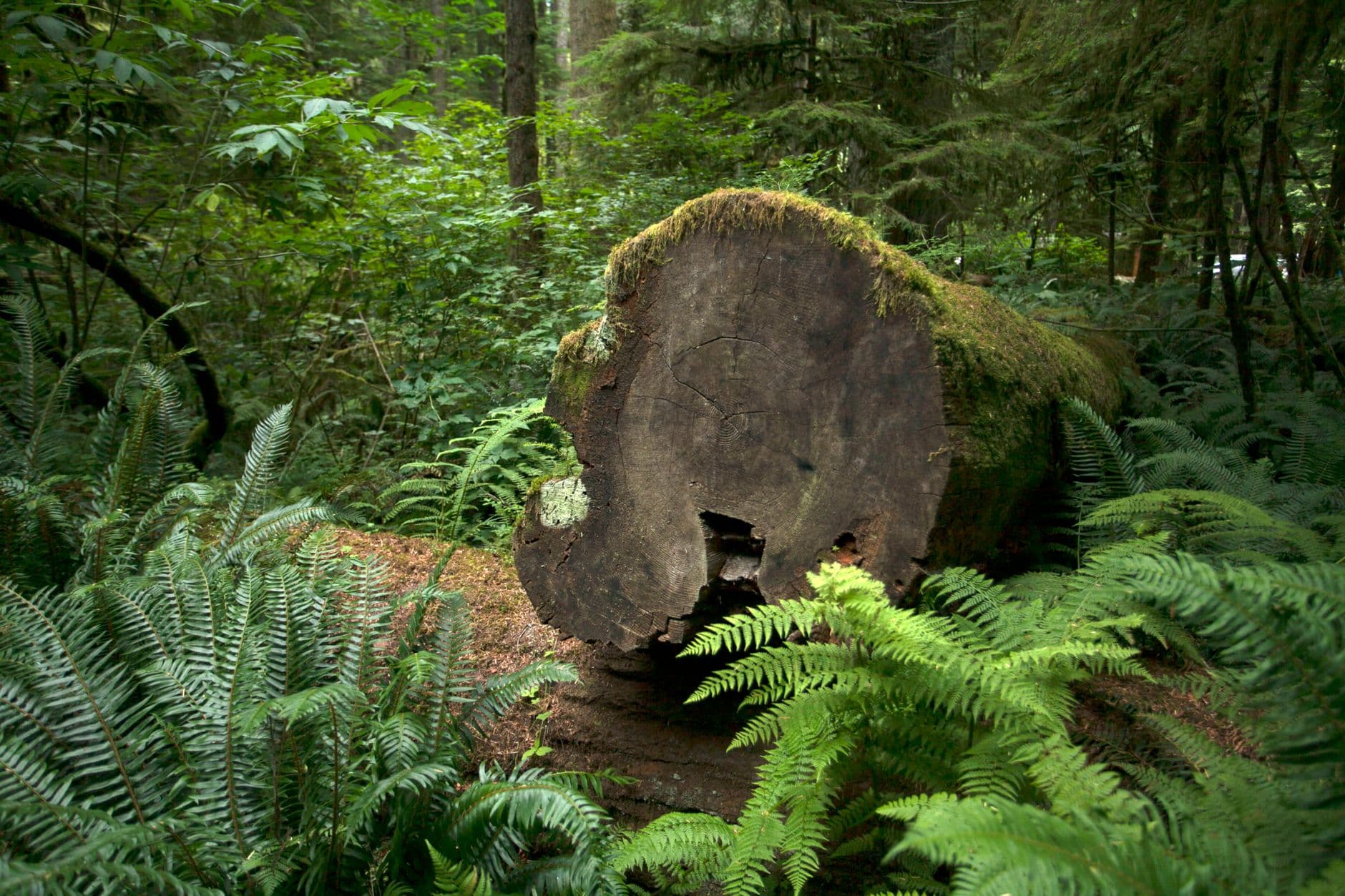 Identification
Woodland Ferns and Mosses: How to Tell Them Apart
How to tell apart the ferns and mosses of the Italian woodland floor: features, common species and biological differences, with the help of Greenkeep's photo recognition.
Read the guide