
Woodland Ferns and Mosses: How to Tell Them Apart
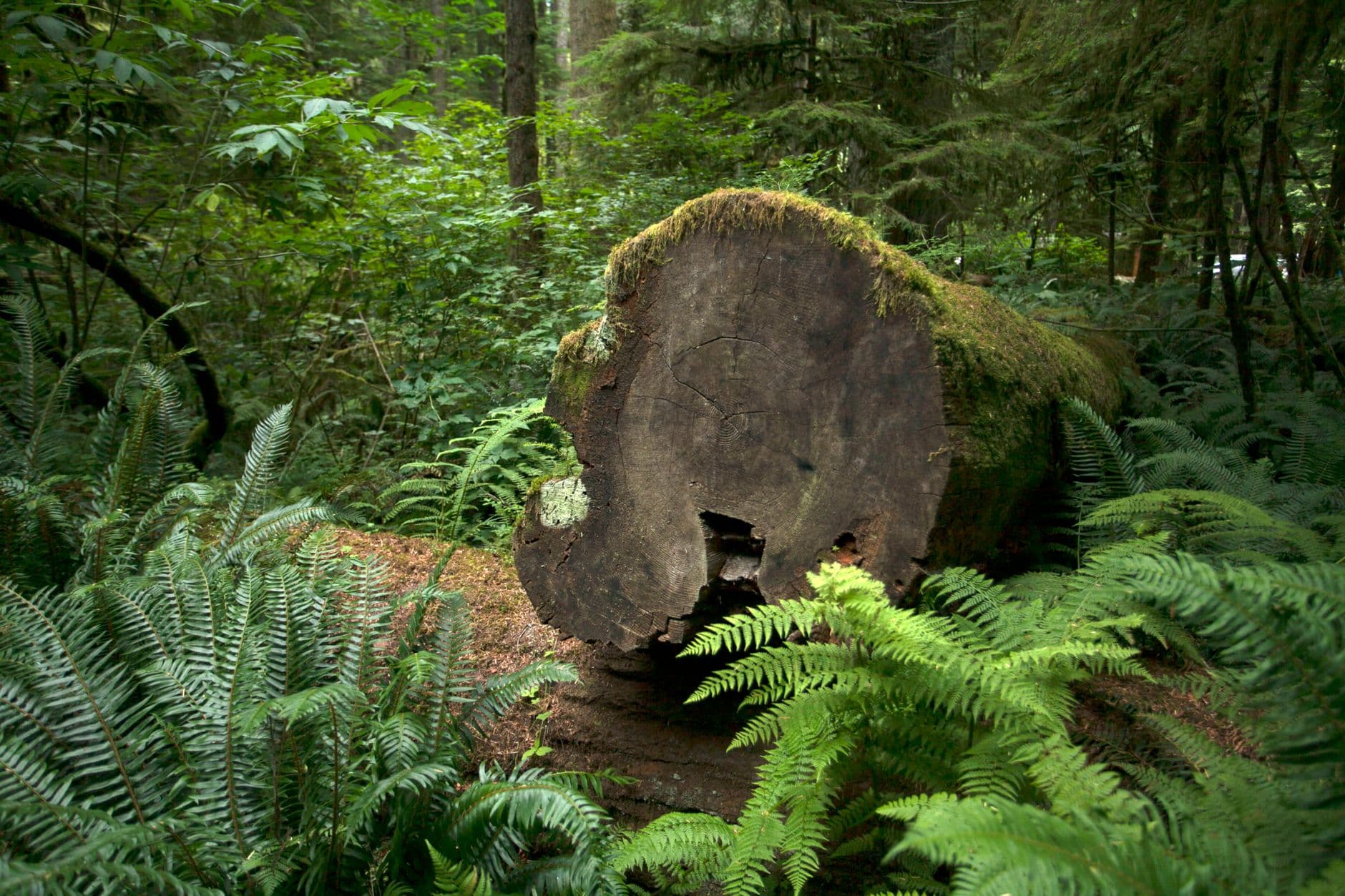
Photo by Jeffry Surianto
In a damp wood, in the shade of the trees, the green carpet beneath your feet is never just one thing. Ferns and mosses share the same shady corners but belong to different worlds: understanding this helps you observe them more closely and find your way among the most common species. This guide is meant to help you recognise and appreciate, not to collect: many woodland plants play an important ecological role and some are protected. Let's see how to tell a fern from a moss at a glance and which forms you most often meet while walking in European woods.
The difference between a fern and a moss, in brief
If you're short on time, here's the practical rule: ferns have well-structured fronds, often divided into many leaflets, with a true conducting system (roots, stem and vessels that carry water). Mosses are tiny, soft, form low cushions or carpets and have neither roots nor true vessels.
What to look at
- Size and habit: ferns grow upward, from a few centimetres to over a metre; mosses almost always stay below a few centimetres.
- Structure: a fern has a frond with branching veins; a moss has little stems with tiny "leaflets" that are extremely thin, in most species just one cell layer thick.
- How they reproduce: neither produces flowers or seeds but spores. In ferns the spores sit on the underside of the fronds in clusters (the sori); in mosses they develop in capsules carried on a thin filament (the seta).
Botanically, ferns are pteridophytes (vascular plants without seeds), while mosses are bryophytes (non-vascular plants). That's why mosses live clinging to damp surfaces and absorb water over their whole surface, while ferns can rise up from the ground thanks to a stem and true roots.
How to recognise woodland ferns
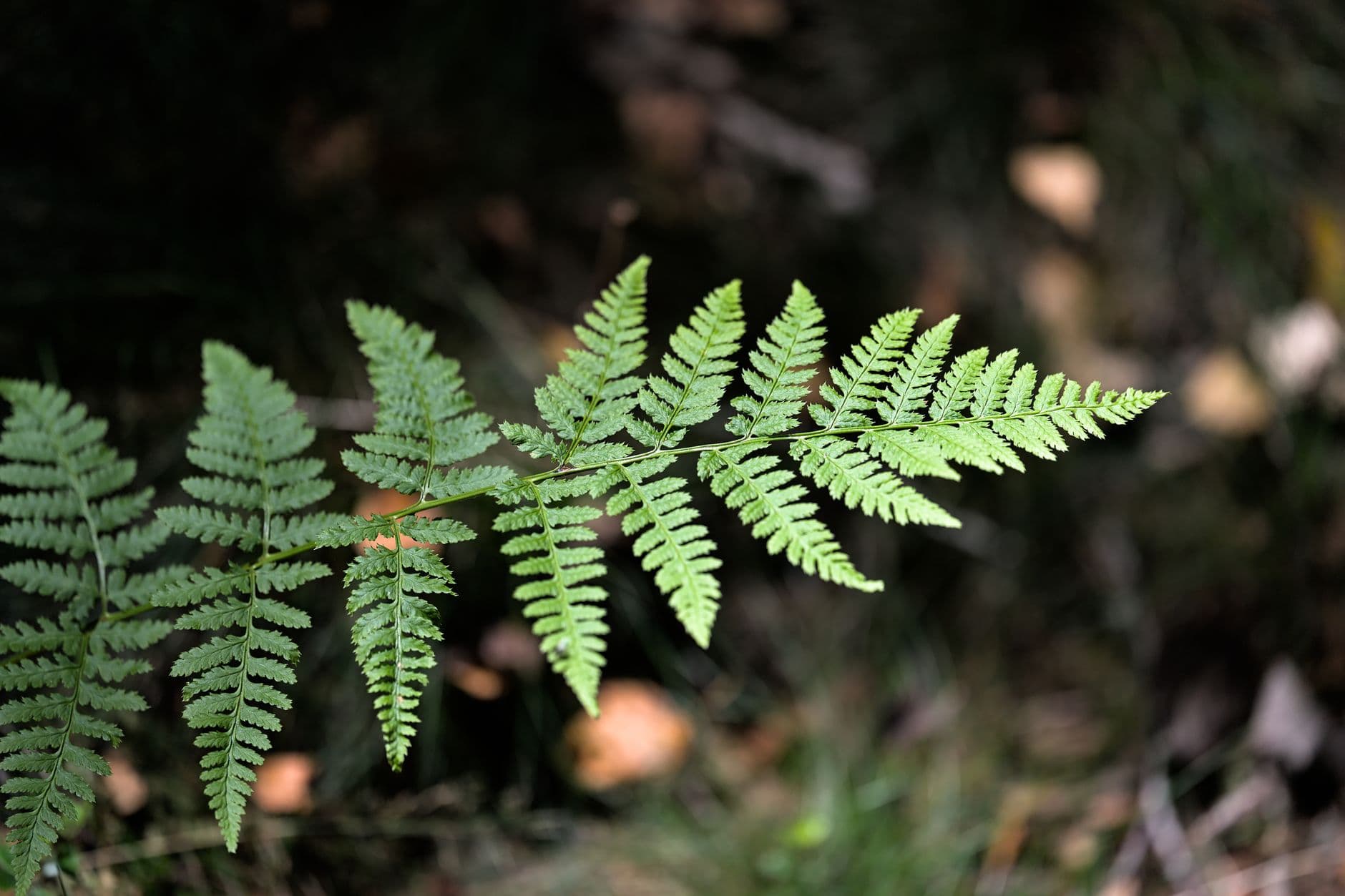
Ferns love cool shade and soils rich in organic matter: you'll find them along watercourses, among mossy rocks and beneath dense canopies. To identify them, look at the shape of the frond (simple or divided several times), the underside (where the sori sit) and how the shoots emerge in spring, coiled in a spiral like a crozier (the characteristic "fiddlehead").
Some common ferns in Italy
- Bracken (Pteridium aquilinum): large, with broad, triangular fronds that rise singly from the ground. It colonises clearings and margins, even sunny ones. It's one of the most widespread.
- Male fern (Dryopteris filix-mas): forms showy funnel-shaped clumps, with robust twice-divided fronds. Typical of broadleaf woods.
- Lady fern (Athyrium filix-femina): more delicate, finely divided fronds of a soft green; it loves very damp places.
- Hart's-tongue fern (Asplenium scolopendrium): unmistakable because the frond is entire, glossy and ribbon-like, not divided. It grows on shady rocks and walls.
- Common polypody (Polypodium vulgare): small, often on trunks and moss-covered rocks, with fronds deeply lobed almost to the rachis, the lobes still joined to one another.
A word of caution: bracken contains toxic substances and should not be considered edible. In general, the rule for the woodland floor is to observe without picking or tasting.
Want a care plan tailored to your plants?
Join the waitlist: species ID, diagnosis and the Gemma assistant, with the lifetime founder discount.
How to recognise mosses
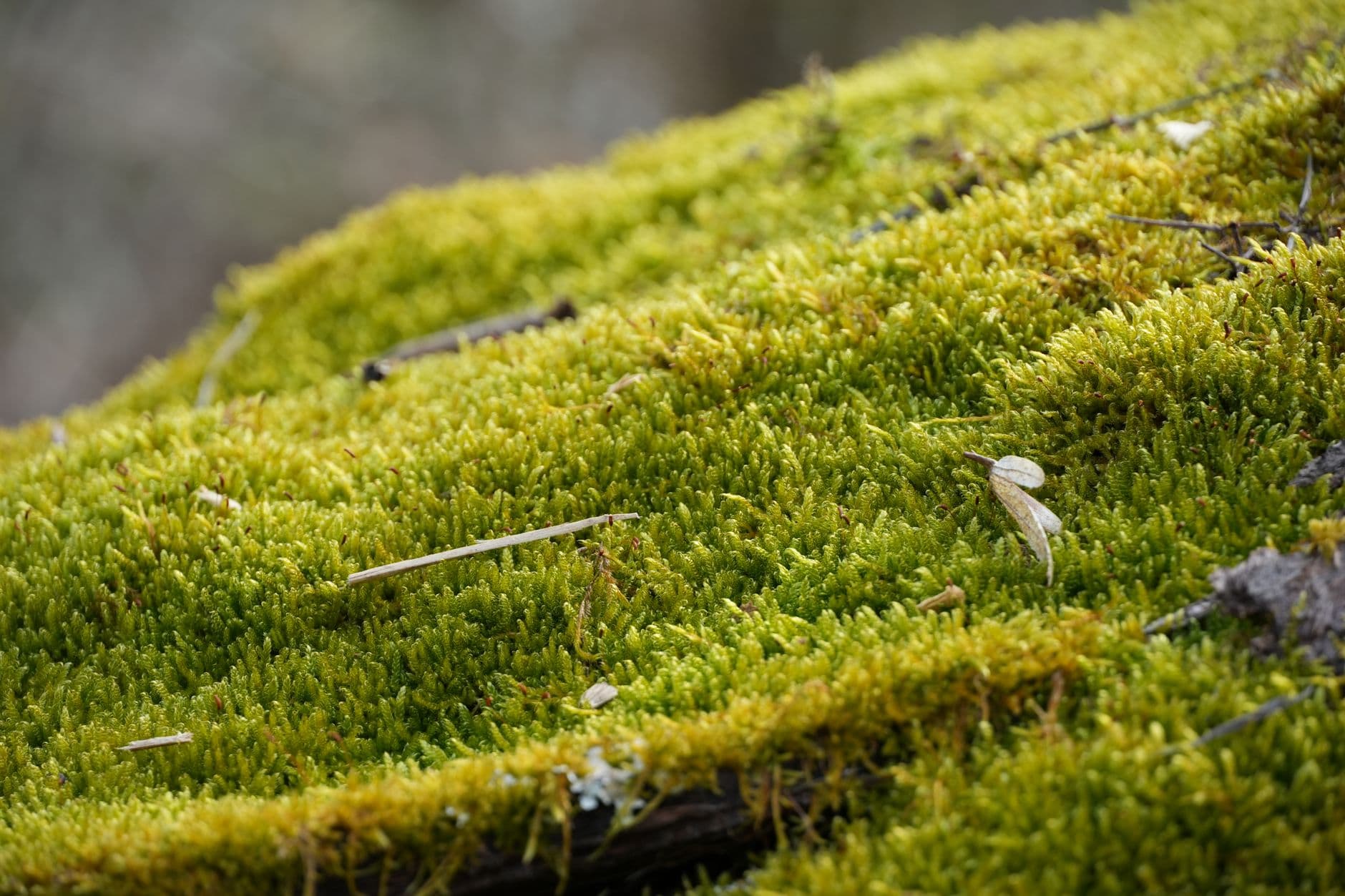
Mosses form the green cushions and carpets that clothe trunks, stones, soil and old bark in the dampest, shadiest spots. To the naked eye they look like a uniform mass, but with a small lens you'll discover dense little stems with very fine leaflets. After rain many mosses carry capsules on thread-like stalks: this is the stage when they release their spores.
Groups and names you often meet
Putting a precise name to a moss often calls for a lens, but some forms are recognisable as categories:
- Turf, tuft and cushion mosses: Polytrichum, among the largest and most robust, grows as an erect turf, with the stems standing separately like a miniature forest; Dicranum forms tufts; Leucobryum, whitish, is the true cushion moss, compact and almost spongy. All are typical of the woodland floor.
- Feathery or carpet mosses (such as Hypnum and Thuidium): they spread out horizontally, forming soft, branching layers.
- Sphagnum mosses (Sphagnum): pale, often pinkish or yellowish, able to hold enormous amounts of water; they're the mosses of peat bogs and waterlogged areas, fragile and protected habitats.
In the same environment you may also find liverworts, other bryophytes that sometimes look like mosses but often have a flattened, ribbon-like form or leaflets arranged on a single plane. Telling apart individual moss species is a matter for specialists: for observation on a walk, it's already a lot to realise that you're looking at a bryophyte and which broad group it belongs to.
Reading the woodland floor environment
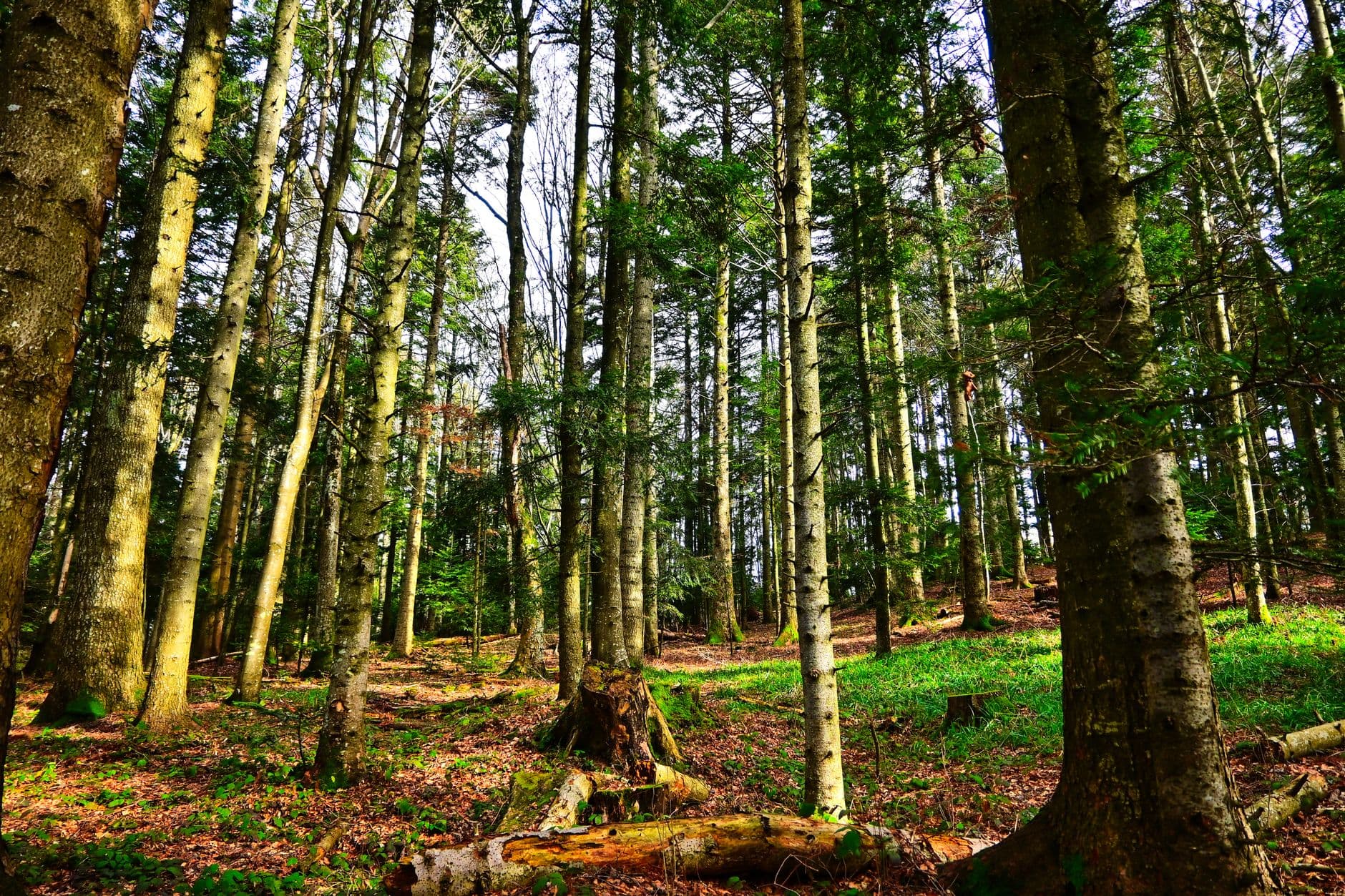
Recognising a plant is easier if you read the context. The understorey is the low layer of the forest, beneath the canopy of the trees: little light reaches here, humidity is high and the soil is rich in decomposing leaves. These are exactly the conditions that ferns and mosses prefer.
Useful clues
- Exposure: the shadiest, dampest side of trunks and rocks hosts more mosses; the larger ferns seek deep soil.
- Water: near streams, springs and gullies you'll find the more delicate ferns and the sphagnums.
- Company: on the woodland floor other shade-loving wild plants often live side by side, and above them the trees that create the microclimate. Recognising these last helps you frame the habitat.
Remember that some of these plants, sphagnums in particular, live in protected and delicate environments: walk on them carefully and take nothing. Moss takes a long time to regrow and plays a valuable role in holding water and protecting the soil.
Identifying species from a photo
When the details aren't enough, a well-taken photo speeds up identification a great deal. With Greenkeep you can frame a fern or a cushion of moss and receive a species suggestion, then dig deeper with the profile to understand its habitat, features and curiosities.
How to take useful photos
- Photograph several details: the whole frond, a close-up detail and, above all, the underside of the frond for ferns (the sori are decisive).
- Include the context: the substrate (soil, rock, trunk) and nearby plants.
- Diffuse light: in shade the greens come out better, so avoid backlight.
For mosses, scale matters too: place a reference nearby (a finger or a coin) and, if you can, capture the capsules. Automatic identification gives its best guidance on ferns, while for mosses it often stays at the level of a group; it's still a good starting point for learning to observe. And above all, remember the golden rule of the woodland floor: identify to know and appreciate, without picking anything.
Let AI tell you exactly what to do
Join the waitlist: species ID, diagnosis and the Gemma assistant, with the lifetime founder discount.
Keep reading
Frequently asked questions
A fern is a vascular plant with true roots, a stem and often divided fronds, and it can grow upward. A moss is a non-vascular bryophyte, tiny, without true roots, forming low cushions or carpets. Both reproduce by spores, not by seeds.
On the underside of fertile fronds, ferns carry sori, clusters of sacs containing the spores. Their shape and arrangement (in lines, dots or rows along the veins) varies from species to species and is one of the most reliable clues for identification.
Often only at the level of a broad group. Precise identification of moss species requires a lens and sometimes analysis under a microscope. A close-up photo with the capsules and a scale reference still helps you find your way among the main forms.
Better not. Several common ferns, such as bracken, contain toxic substances and are not to be treated as edible. The rule for the woodland floor is to observe and recognise without picking or tasting anything.
Because they share a need for shade and high humidity. The understorey, with little light, soil rich in decomposing leaves and damp air, offers exactly these conditions, which favour both ferns and bryophytes.
Sources
Related guides
 Identification
How to Identify the Most Common Trees in European Woodlands
A practical guide to identifying oaks, beeches, chestnuts and conifers by observing leaves, bark, fruits and overall shape during a walk in the woods.
Read the guide Identification
Wild Meadow Flowers: The Most Common Ones to Recognise
A practical guide to the most widespread wild meadow flowers in temperate Europe: how to recognise them, when they bloom and which ones to avoid touching.
Read the guide Identification
Poisonous Wild Plants You Should Learn to Recognise
A guide to recognising the most dangerous wild plants in Italian woods and meadows, so you can safely avoid them on your walks.
Read the guide